PfMP Certification Support: Self-Study vs. Coaching (ROI Calculator by Candidate Profile)
Compare PfMP certification support by candidate profile. Estimate total cost, study time, and when coaching is worth paying for.

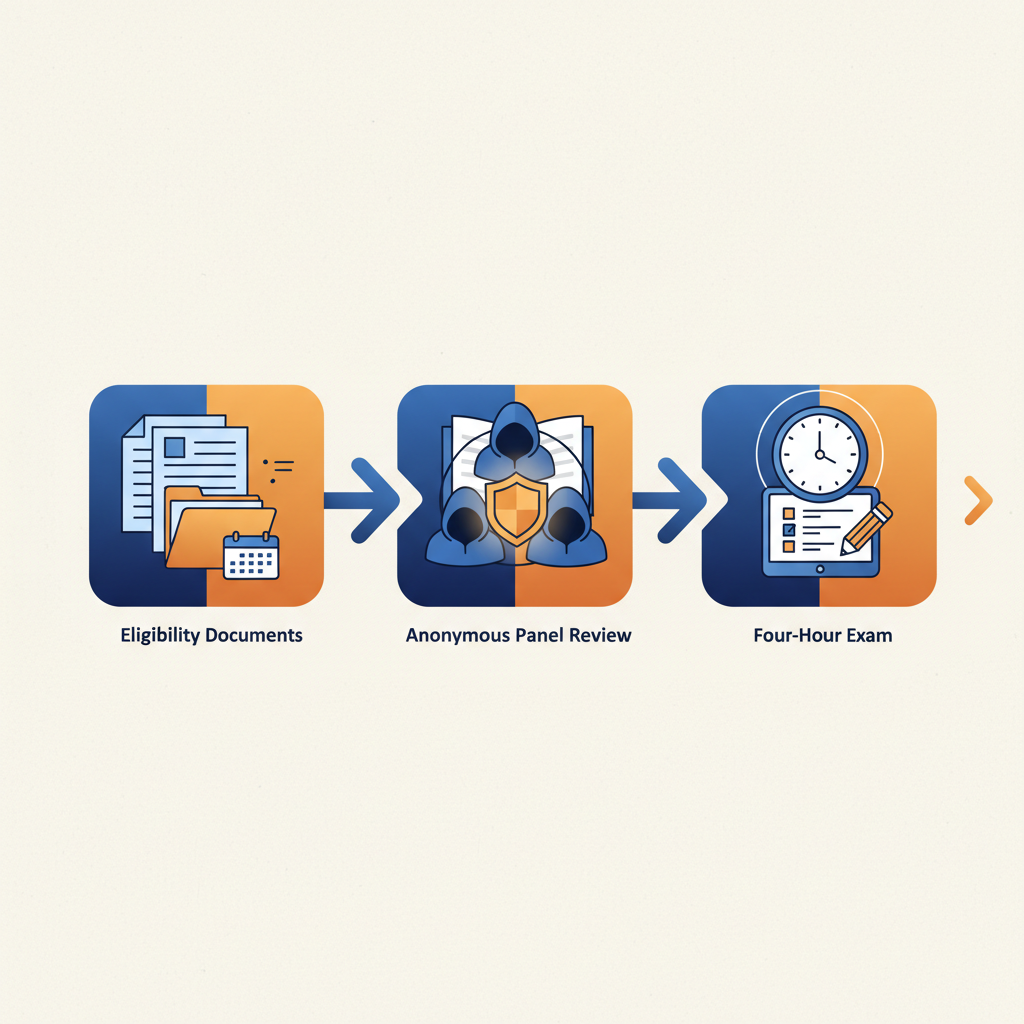
A PfMP path becomes expensive when the wrong problem survives too long. The exam contains 170 questions, but the test is only one gate: candidates must first get their portfolio experience through a panel review.
PfMP certification support is worth paying for when your application evidence is complex, your qualifying months are uncertain, a previous setback changes the odds, or a delay has measurable cost. Self-study suits clear, disciplined candidates; application review fits documentation risk; full coaching fits several risks that compound.
We compare the three routes, show how to model their real cost, and give you a candidate-profile rubric for choosing support without paying for more than you need.
Start with the Fixed PfMP Requirements and Costs
Before comparing training formats, establish whether you have a viable PfMP application. PMI requires 96 months of professional business experience within the previous 15 years, plus qualifying portfolio-management experience. The portfolio requirement is 84 months with a secondary degree, 48 months with a bachelor’s degree, or 36 months with a GAC-accredited degree. Read our guide to qualifying portfolio work before treating seniority or strategic-planning exposure as proof of eligibility.
The basic cash cost is not just a course invoice. PMI currently lists a US exam fee of $800 for members and $1,000 for nonmembers, though candidates should confirm regional pricing at checkout. The process also includes a panel review after payment, and PMI’s catalog describes that review as taking approximately 60 days. That waiting period is why a realistic ROI calculation separates study time from certification timeline. See PMI’s current fee listing before entering any number in the calculator.
The application itself asks you to document portfolio experience in a way that demonstrates strategic alignment, governance, performance, risk management, and communications. A well-prepared candidate can study during the review window. A candidate whose evidence is unclear may be better served by resolving that risk first, using our panel review guide.
Compare PfMP Certification Support Models by Candidate Profile
The choice is not between “serious” candidates who buy coaching and “independent” candidates who do not. It is a decision about where your risk sits. Some candidates need knowledge practice. Others need help turning years of cross-functional work into a coherent portfolio narrative. A smaller group has both problems, plus a time-sensitive reason to reduce rework.
Use the comparison below as a model selector, not a promise of a result. We do not assign published pass probabilities because we could not find a public PMI breakdown by support format.
| Support Model | You Pay For | Usually Fits | Do Not Expect |
|---|---|---|---|
| Self-Study | Standards, practice materials, and your own study plan | Clear eligibility, clean portfolio evidence, and consistent study time | An eligibility shortcut or a guaranteed outcome |
| Application Review | Focused feedback on experience summaries and evidence mapping | Strong experience with unclear documentation or portfolio language | A substitute for qualifying experience |
| Full Coaching | Application guidance, structured study, feedback, and accountability | Multiple risks, previous setbacks, or costly deadlines | A claimed pass-rate uplift without audited evidence |
Self-Study: Best for Clear Evidence and Strong Self-Direction
Self-study is often the lowest-cash route for an eligible portfolio leader who can explain their portfolio decisions plainly. It works best when your examples already show how you balanced investments, aligned work to strategy, and operated within governance structures.
Choose this route when you can create a weekly plan, diagnose weak domains, and protect regular study time. Our self-paced options can help you compare formats without confusing flexibility with a lack of structure.
Application Review: Best for Documentation Risk
Application review is usually the sensible middle route. It addresses the point where highly experienced candidates can still lose time: translating complex work across employers, business units, and governance forums into evidence a panel can evaluate.
This is especially relevant for a PgMP holder moving into portfolio leadership. Program outcomes do not automatically demonstrate portfolio-level selection, prioritization, investment trade-offs, or strategic alignment.
Full Coaching: Best When Risks Compound
Full coaching is most defensible when several risks arrive together. Examples include ambiguous qualifying months, fragmented records, a prior panel or exam setback, a weak study diagnostic, and a deadline tied to a role change or employer commitment.
The value is not that structured help removes PMI’s standards. Its value is reducing avoidable rework across the application, study plan, and exam-readiness process.
Calculate the Total Cost and Time to Pass
A useful calculator treats support as an expected-cost decision. It does not assume that every study hour has the same value or that coaching always makes someone faster. Instead, it asks what each route costs, how much time it needs, and what a delay would mean to your specific situation.
Start with cash cost, then add time only when it represents a real trade-off. If study happens outside paid work and does not displace paid work, you may reasonably set your hourly opportunity cost to zero. For a US reference point only, the Bureau of Labor Statistics reports a median hourly wage of $48.44 for project management specialists in May 2024. That is not a portfolio-manager rate or a default value for every candidate.
Separate Cash Cost from Time Cost
Enter the exam fee, materials, selected support price, optional membership cost, and possible retake expense. Then enter study and application hours separately for each route. This creates an honest comparison between spending more cash now and spending more time later.
The calculator adds total cash cost, time value, and expected retake cost to estimate your expected cost to pass.
The downloadable ROI calculator should leave likelihood inputs editable. Your first-attempt likelihood belongs in a conservative, base, and optimistic scenario range, not in a claim that one format produces a fixed result.
Compare Candidate Profiles, Not Generic Averages
The same course price can be unnecessary for one candidate and economical for another. Use the profile table to set the calculator’s support price, hours, and scenario assumptions.
| Candidate Profile | Likely Starting Route | Calculator Focus | When Paid Support Becomes More Defensible |
|---|---|---|---|
| Experienced portfolio leader with clear governance evidence | Self-study | Materials, study time, and exam fee | A diagnostic reveals material domain gaps |
| PgMP holder pivoting to portfolio leadership | Application review | Time spent mapping program work to portfolio evidence | Portfolio examples lack investment or strategic-alignment decisions |
| Portfolio manager without PMI credentials | Self-study or application review | Documentation time and confidence in eligibility | Experience is real but difficult to express consistently |
| Candidate with fragmented employment records | Application review | Application rework and panel-review delay | Records or qualifying months are hard to validate |
| Career changer with strategic-planning experience | Eligibility mapping first | No training spend until qualification is clear | Only after qualifying portfolio experience is established |
| Candidate with a prior setback or hard deadline | Full coaching or targeted review | Retake cost, delay cost, and additional study hours | Several documented risks occur at once |
For realistic practice planning, pair the calculator with our practice-test reality check. A score is useful only when you can identify whether the problem is recall, portfolio-level judgment, or question interpretation.
Read the Break-Even Result Carefully
The most useful output is not “coaching pays” or “coaching does not pay.” It is the point at which additional support costs less than the expected cost of delay, rework, or another attempt.
If you have no measurable deadline cost and clear application evidence, self-study often remains financially sensible. If a later credential date would affect a promotion process, staffing plan, or contract requirement, enter that monthly impact and compare it against the incremental support cost.

Score When Structured Help Is Worth Paying For
Use a 10-point Coaching Value Score before choosing a route. The score is not a substitute for eligibility, and it is not a prediction. It is a practical way to spot whether your risks are isolated or compounding.
Score Application and Eligibility Complexity
Award up to three points for complex evidence, such as multiple employers, difficult-to-document governance work, or portfolios that evolved through mergers or reorganizations. Add up to two points when your qualifying months require careful mapping.
A high score here usually favors application review before buying broad exam preparation. That order matters because no amount of mock-question practice repairs a weak experience narrative. Our mentoring distinction helps separate genuine governance support from generic exam advice.
Add Deadline, History, and Readiness Risk
Add up to two points for a prior panel or exam setback, up to two for a hard deadline with measurable consequences, and one for a weak diagnostic in a heavily weighted domain. Strategic Alignment and Portfolio Performance together account for half of the exam blueprint, so gaps there deserve attention.
Use these decision bands:
- 0 To 2 Points: Self-study is usually appropriate.
- 3 To 5 Points: Consider targeted application review or focused tutoring.
- 6 To 10 Points: Price full coaching against the cost of delay and rework.
Watch for Red Flags That Change the Decision
The following conditions do not guarantee that you need coaching, but they justify a more careful cost comparison.
- Ambiguous portfolio ownership: Your role supported a portfolio but you cannot yet explain your decision authority.
- Missing evidence: Your strongest examples rely on unavailable records or hard-to-reach stakeholders.
- Prior setback: You do not know whether the earlier problem was evidence, exam technique, or study coverage.
- Deadline pressure: Delaying certification has a specific, credible professional cost.
- Inconsistent practice results: Your performance varies sharply across high-weight domains.
Before deciding what support to buy, complete our five-domain readiness test. It helps distinguish a knowledge gap from an application-evidence gap.
Work with Augment Consultancy
At Augment Consultancy, we built this comparison for senior practitioners who need a decision, not a sales pitch. Our approach starts with evidence mapping: what work qualifies, what the application must prove, and which exam domains need attention. We then help candidates choose only the level of support their risk profile justifies, whether that means an independent plan, an application-focused review, or more structured preparation. You keep ownership of your experience narrative and study schedule; we bring a practical framework for testing assumptions before you spend. If your calculator shows that delay, rework, or uncertainty costs more than targeted help, start with a readiness conversation. If it does not, use the self-study route with confidence and return when the facts change. We also explain the panel-review milestones so your preparation plan fits the real certification sequence. Explore our learning resources and next steps at Augment Consultancy.
FAQs on PfMP Certification Support
Use these answers before choosing support.
Can I Pursue PfMP Without Another PMI Credential?
Yes. Eligibility focuses on education, professional business experience, and qualifying portfolio-management experience. Another PMI credential can strengthen your background, but it is not formally required.
How Much Time Should I Budget Before the Exam?
Plan study in weeks rather than a promised deadline. Your application, any audit, the panel review, exam availability, and a possible retake all affect timing.
When Is Full Coaching Worth Paying For?
Full coaching is most defensible when several risks stack together: ambiguous experience evidence, a prior setback, a hard deadline, and weak diagnostic results in heavily weighted domains.
Can Online Training Replace Application Review?
Online training can build exam knowledge, but no course changes PMI eligibility. Choose application review when documentation is the constraint, and coaching when multiple time and readiness constraints interact.