PfMP Training for Teams of Three: Options, Timelines & Pricing

TL;DR
PfMP training for teams of three: compare corporate cohorts, multi-seat self-paced, and on-site bootcamps on timelines, pricing, and readiness.
When a VP tells three people they need PfMP® certification by year-end for a client pitch, the clock and the budget tighten at the same time. One live online PfMP program lists a 50 percent group discount off its published price for group bookings, and most vendors gate their best corporate rates behind headcounts a three-person team doesn't always hit.
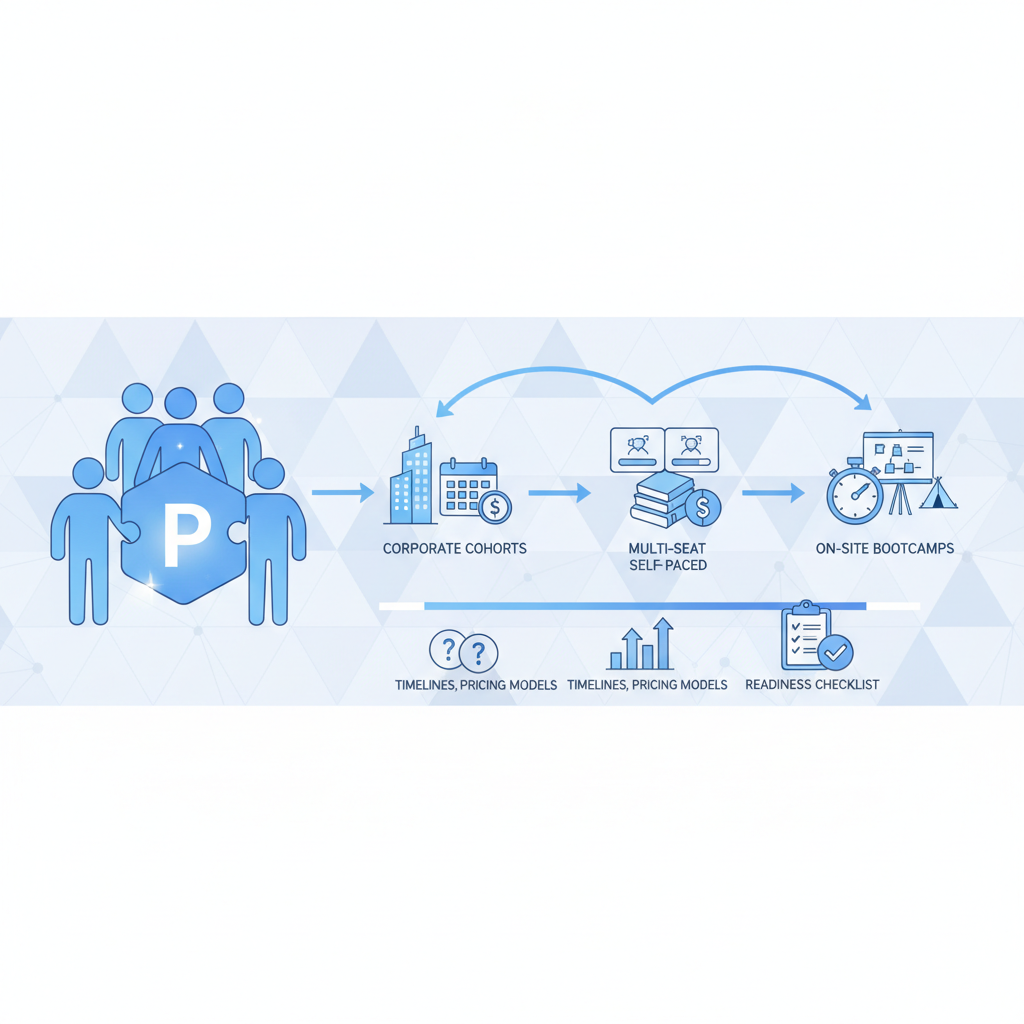
For a three-person PfMP certification push before year-end, look at three group-enrollment models: a dedicated corporate cohort with a fixed start date, multi-seat self-paced training with shared mentor sessions, or an on-site bootcamp. Live cohorts can get a team exam-ready in roughly six to seven weeks; self-paced-plus-coaching formats generally need eight to twelve weeks depending on how closely the three people keep pace.
This piece compares those three models side by side, lists the questions to ask any vendor before signing a multi-seat contract, gives a readiness checklist for confirming your three candidates can actually move together, and covers how one training provider structures its own group cohorts. Most individual-enrollment landing pages skip all of this, which is exactly why a VP scrambling to book three seats can't find a straight answer on timelines or pricing logic.
Group-Enrollment Models Compared for PfMP Team Training
Most PfMP training vendors sell to individuals by default, which is why group logistics rarely show up on a landing page. Once you're enrolling three people together, three distinct delivery models exist, and each handles start dates, coaching, and pricing differently. Here's how they stack up before you pick one.

| Model | Typical Timeline (3-Person Team) | Pricing Model | What's Included |
|---|---|---|---|
| Corporate Cohort (Dedicated Batch) | About 6-7 weeks, one shared start date | Flat team rate or discounted per-seat block | Fixed schedule, cohort-only sessions, group Q&A |
| Multi-Seat Self-Paced + Shared Coaching | 8-12 weeks, depending on pace alignment | Per-seat pricing bundled with group coaching calls | On-demand modules, shared mentor sessions, individual progress tracking |
| On-Site / In-House Bootcamp | Condensed multi-day intensive, varies by vendor | Flat corporate rate, often gated to a minimum headcount | Private delivery, custom scheduling, sometimes bundled vouchers |
A dedicated corporate cohort locks your three candidates into one schedule from day one. One Lagos-based batch runs 35 hours of instruction across roughly six weeks on a weekend cadence, priced about 23 percent below list when booked into an existing cohort, which is close to a published group-friendly rate. The tradeoff is flexibility: everyone shows up on the same days every week, whether or not their day jobs cooperate.
Multi-seat self-paced with shared mentor sessions flips that tradeoff. Each person works through content on their own clock, then the group meets on a set cadence for coaching and application review. A detailed panel review guide matters more here than in a lockstep cohort, since nobody is forced onto the same pace and someone can quietly fall behind on documenting portfolio experience for the panel while the other two move ahead.
On-site or in-house bootcamps make sense once headcount climbs. The same live online program referenced above sets its in-house corporate batch threshold at seven or more employees, below which teams get routed into a public cohort or self-paced track instead. For a group of three, that usually means private on-site delivery either isn't offered yet or comes at a per-seat premium that cancels out any group discount.
What to Ask PfMP Training Vendors Before You Sign a Group Contract
Nearly every vendor markets "corporate training" somewhere on its site, but almost none spell out what actually changes once you enroll three people instead of one. Before signing anything, push for straight answers on these points, because the gaps between the models above tend to surface right here.
- Bulk pricing structure: ask whether the "team rate" is a genuine flat fee for three seats or three discounted individual seats stacked together. One provider advertises special group discounts and customized corporate packages but leaves the exact break unpublished until you call, which is typical of this market.
- Coordinated start dates: confirm whether all three seats lock to a single start date, or whether self-paced seats can begin on staggered days if one person's work schedule differs from the other two.
- Shared vs individual coaching: find out if mentor sessions are truly shared (same call, same coach, same cohort) or just marketed that way while each person quietly gets routed to a different coach.
- Team readiness assessment: ask whether the vendor screens experience level before enrollment, or whether it enrolls whoever pays and lets the panel review sort out who was underqualified months later.
Generic, high-volume providers rarely answer these questions clearly because their model depends on filling seats, not screening cohorts. A more boutique training model tends to ask these questions before you do, which is usually the fastest way to tell a real group program from an individual course with a corporate label attached.
Team-Readiness Checklist Before Enrolling Three People in PfMP Training
Group pricing only pays off if all three people are actually ready to move together. Before committing to a shared cohort or multi-seat contract, run all three candidates through the readiness checklist below.

- Portfolio oversight experience: PMI's own PfMP certification page requires meaningful, hands-on portfolio management experience before you can even apply. If one team member has mostly done project-level work rather than portfolio-level governance, they may need extra prep the other two don't.
- Application timeline alignment: does everyone have a similar number of portfolios to document for the panel review, or will one person's paperwork simply take longer to assemble?
- Learning-pace compatibility: self-paced formats assume some self-discipline; if one member historically needs deadlines and structure to finish coursework, a live cohort may fit the group better than self-paced-plus-coaching.
- Availability for shared sessions: three overlapping calendars are harder to align than one, so confirm the meeting cadence actually works for all three before locking in a shared mentor-session schedule.
- Shared goal clarity: if a year-end client pitch is driving the deadline, make sure all three understand exactly what "exam-ready" means by that date, not just "certified eventually."
Teams that skip this step usually discover the mismatch three or four weeks in, right when a live cohort is hardest to leave. Comparing a few self-paced alternatives before committing can show which pacing model actually fits three different working styles instead of guessing. It's also worth checking success stories from other cohorts to see how similarly mixed-experience teams handled the pace gap without one person dragging the other two behind.
How Augment Consultancy Structures Group PfMP Training
If a corporate cohort feels too rigid and a from-scratch in-house bootcamp is overkill for three people, a multi-seat self-paced format with shared mentor sessions sits in between. Here's how one such program runs, without claiming it's the only way to do group PfMP prep well.

Augment's group PfMP option puts each of the three seats through the same course store curriculum on an individual schedule, then brings the group together for shared mentor sessions where coaching and application guidance happen as a cohort instead of three separate one-on-ones. Sessions are expert-led and lean on real-world portfolio scenarios rather than generic slide decks, which matters most for the part of PfMP prep that trips up mixed-experience teams: documenting governance decisions and benefits-realization data the way a PMI panel reviewer actually expects to see it.
Each candidate tracks progress between shared sessions through the learning portal, so the coach can spot when one person is pulling ahead or falling behind before it turns into a scheduling problem three weeks before the exam. Teams weighing this against a locked cohort or an on-site bootcamp can start with a senior leaders guide to what the panel review expects from portfolio-level candidates, then compare that against their own three timelines before choosing a model.
Get Your Team PfMP-Ready with Augment Consultancy
If your VP needs three people exam-ready by year-end, guessing at group logistics is the fastest way to lose weeks you don't have. Augment Consultancy runs its group PfMP option as multi-seat self-paced training with shared mentor sessions, so your three candidates keep their own schedules while one coach tracks all three toward the same deadline. Start by reviewing the certification training playbook to see the full application-to-exam sequence mapped out, then reach out with your target date and current experience levels for each team member. A coordinated plan built around your actual deadline beats a generic corporate package every time.
FAQs on PfMP Training for Teams of Three
How Much Does PfMP Group Training Cost for Three People?
Pricing varies by model: flat team rates for corporate cohorts, per-seat pricing bundled with shared coaching for self-paced tracks, and premium per-seat costs for on-site delivery below typical corporate minimums.
Can a Team Train Together for PfMP Certification?
Yes. Corporate cohorts, multi-seat self-paced programs with shared mentor sessions, and on-site bootcamps all let three people train together, though coordination and pacing differ significantly between the three models.
How Long Does PfMP Training Take for a Team of Three Before the Exam?
Live cohorts typically reach exam-ready in about six to seven weeks; multi-seat self-paced formats with shared coaching generally need eight to twelve weeks depending on pace alignment across the team.
Is There a Bulk Discount for PfMP Certification Training?
Some providers offer bulk discounts, including one live online program advertising up to 50 percent off for group bookings, though exact breaks for a three-person team often require direct vendor negotiation.
What Is the Difference Between Individual and Corporate PfMP Training?
Individual enrollment gives one person a fixed course and schedule; corporate or group training coordinates start dates, shared coaching, and sometimes bulk pricing across multiple candidates preparing together.
Do All Three Team Members Need the Same Experience Level to Enroll Together?
Not identical, but PMI's PfMP eligibility criteria require genuine portfolio oversight experience from everyone, so significant experience gaps between team members can slow the group down during application and panel review.