PgMP to PfMP Transition: The Four Capability Shifts That Trip Program Managers


TL;DR
A PgMP to PfMP transition guide explaining four mindset shifts, parallel exam scenarios, and a focused study plan for program managers.
PMI’s 170-question PfMP exam tests a different decision altitude from PgMP. We map the domain change, contrast parallel scenario stems, and build a study plan around each capability gap.
The PgMP to PfMP Transition requires four mental-model shifts: from delivery accountability to investment governance, from program benefits to portfolio value optimization, from stakeholder alignment to C-suite strategy translation, and from risk mitigation to enterprise risk appetite. PfMP questions reward the portfolio decision, not the best rescue plan for a single program.
Shift 1: From Delivery Accountability to Investment Governance
The first shift is about authority. A PgMP holder is trained to coordinate related components, resolve constraints, and keep a program moving toward its intended benefits. PfMP asks a different question: should this investment continue to receive scarce organizational attention, funding, and capacity at all?
That difference shows up in the exam blueprints. The current PgMP outline allocates 44% of questions to Program Life Cycle Management. PfMP gives 45% of its exam to Strategic Alignment and Governance combined, where candidates must think in terms of investment choices and decision rights.
| PgMP Lens | PfMP Lens | What Changes In The Answer |
|---|---|---|
| Keep related components coordinated | Decide whether the component belongs in the portfolio | Protect the portfolio, not merely the plan |
| Escalate a delivery variance | Apply governance thresholds and decision rights | Ask who can authorize, pause, or stop work |
| Optimize resources within the program | Reallocate finite capacity across investments | Compare strategic value across the mix |
| Maintain program alignment | Reassess alignment when strategy changes | Treat alignment as an ongoing test |
The Same Scenario, Two Different Questions
Imagine a transformation program is six months late and requests more funding. A PgMP question is likely to test how you analyze the variance, coordinate component recovery, and preserve program benefits. A PfMP question is more likely to ask whether additional investment still fits strategy, capacity, priorities, and governance criteria.
The correct PfMP instinct is not automatically to fund the recovery plan. It is to bring the portfolio governing body a decision-ready assessment of options, trade-offs, and implications for the wider mix. Use our question framework to practice identifying that governing decision before evaluating answer choices.
What PfMP Expects You to See
Portfolio governance covers investment analysis, selection, prioritization, authorization, and oversight. The portfolio standard treats those actions as inputs to governance body decisions, not as delivery-management tasks.
For every scenario, ask: What decision is required? Who owns it? What threshold or criterion applies? What happens to other work if this component gets more money or people?
Shift 2: From Program Benefits to Portfolio Value Optimization
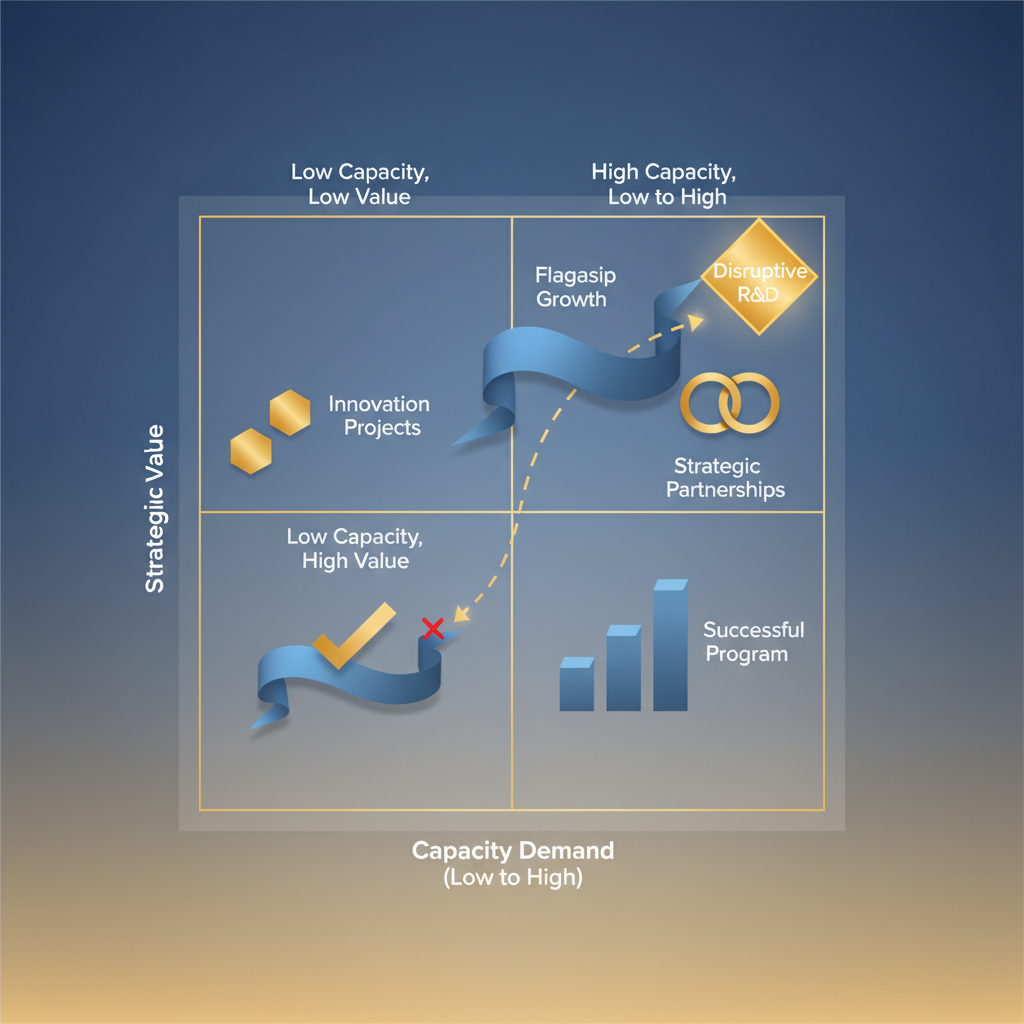
Program managers rightly focus on whether their coordinated work will produce planned benefits. Portfolio managers must go further. They compare the expected value of one program against competing projects, operations, risks, and capacity constraints.
This is why PfMP scenarios can feel uncomfortable even when the program is performing well. The portfolio answer may reduce, defer, or terminate a healthy program if another component provides greater strategic value within the organization’s available resources.
| Scenario Element | PgMP Framing | PfMP Framing |
|---|---|---|
| Specialist capacity is limited | Level resources across program components | Rebalance capacity across the entire portfolio |
| Benefits remain on track | Protect realization and transition | Compare value against alternative investments |
| A component needs more funding | Assess program impact and corrective action | Test strategic priority, risk, and opportunity cost |
| A new initiative appears | Protect committed program objectives | Reprioritize the portfolio mix if strategy supports it |
What PfMP Expects You to See
At portfolio level, value is comparative and aggregate. PMI describes portfolio value management as measuring, validating, and reporting value delivered across components with the goal of maximizing return on investment within acceptable risk. That is a broader judgment than confirming whether one program is still delivering its benefits.
How to Study This Gap
Turn every benefits question into three portfolio questions: Is this still the best use of capacity? What higher-priority work could lose out? What action improves total portfolio value?
Practice results become more useful when you classify misses by decision lens rather than by topic label. Our guide to practice-test results helps distinguish a knowledge gap from a habit of answering like a delivery leader.
Shift 3: From Stakeholder Alignment to C-Suite Strategy Translation
PgMP stakeholder work is often about maintaining sponsor commitment, coordinating expectations, and ensuring people understand the program’s path to benefits. PfMP communication is about giving senior decision-makers the information they need to govern the portfolio.
A sponsor who objects to a changed priority does not always need more project detail. The governing body may need a short explanation of strategic impact, capacity implications, financial exposure, risk posture, options, and a recommendation.
The Parallel Scenario Pair
A PgMP stem may ask how to regain sponsor alignment after a component delay. The strongest response often engages stakeholders, clarifies impacts, and updates program communications.
A PfMP stem using the same facts asks what the portfolio manager should report to executives before a reprioritization decision. The strongest response frames the trade-off across the portfolio and ties the recommendation to strategy, rather than defending the original program baseline.
The Executive Communication Test
Before selecting an answer, ask whether it helps a C-suite audience decide, authorize, or rebalance. If it only improves stakeholder comfort without clarifying the investment decision, it is usually too narrow for a PfMP scenario.
Study the exam beyond definitions and process names. Our resource on study beyond the Standard can help you rehearse the difference between reporting status and translating portfolio implications.
Shift 4: From Risk Mitigation to Enterprise Risk Appetite
Program risk management asks how to reduce threats to scope, schedule, cost, quality, and benefits. That remains useful knowledge, but PfMP pushes risk into the investment decision itself.
The portfolio manager must assess aggregate exposure. Several individually acceptable initiatives can create an unacceptable concentration of market, technology, regulatory, or capacity risk when viewed together.

The Same Scenario, Two Different Risk Decisions
Suppose three initiatives depend on the same supplier. A PgMP response may focus on mitigating supplier risk within the program through alternatives, contingency planning, or escalation.
A PfMP response must also ask whether the combined supplier exposure exceeds organizational tolerance, whether the portfolio should diversify investments, and whether resources or reserves should be moved. The portfolio risk standard explicitly connects portfolio risk planning with risk strategy, tolerance, and thresholds.
What PfMP Expects You to See
Risk is not simply something to minimize. It is an input to prioritization, balancing, and value decisions. The best answer may accept a risk because it is within appetite, or reduce an initiative because aggregate exposure has become too concentrated.
How to Study This Gap
Keep a four-column error log: exposure, affected components, risk appetite or threshold, and portfolio action. Then compare your experience against portfolio-work evidence so your study language reflects genuine portfolio decisions.
Build Your PgMP to PfMP Transition Study Plan
A focused six-week plan is usually more valuable than rereading every PgMP resource. The goal is not to discard program management knowledge. It is to recognize when that knowledge is only part of the decision.
Weeks 1 and 2: Learn the Decision Hierarchy
Start with Strategic Alignment and Governance. Learn how strategy becomes selection criteria, who owns authorization, and what evidence supports a change to the portfolio mix. PMI lists these domains at 25% and 20% respectively in its PfMP exam structure.
Weeks 3 and 4: Practice Value and Capacity Trade-Offs
Study Portfolio Performance through scenarios involving resource constraints, shifting priorities, component balance, expected value, and corrective portfolio action. Use a readiness test to identify whether your weak answers come from terminology, judgment, or portfolio experience.
Weeks 5 and 6: Add Risk and Executive Communication
Finish with aggregate risk and executive communication, then use timed scenario sets. Review every missed question by asking which of the four shifts you missed, rather than merely memorizing the preferred answer. Before choosing a preparation format, review your error log by domain and capability. Notice whether weak results repeat during prioritization, resource balancing, governance escalation, executive communication, or aggregate-risk decisions. This diagnosis will tell you whether you need more reading, more timed practice, or more structured feedback. Give recurring weaknesses priority over any total score in your review. If you need a format that adapts to work demands, compare flexible study options.
Work with Augment Consultancy
At Augment Consultancy, we help senior practitioners turn proven program leadership into portfolio-level judgment. Our coaching focuses on the decisions that make the PfMP exam feel unfamiliar: selecting investments, balancing capacity, communicating trade-offs to executives, and judging risk against organizational appetite. We do not treat a mock score as a verdict. We use it to locate the mental model behind a miss, then build practice around that gap. You can work through scenario language, map your experience to portfolio evidence, and decide whether structured support fits your study style and timetable. If you are moving from PgMP, our aim is not to make you unlearn what you know. It is to help you apply it at the level where strategy, funding, governance, and value compete for attention through clear examples, targeted feedback, and a preparation routine you can sustain. Start your next step with Augment Consultancy
FAQs on PgMP to PfMP Transition
Portfolio decisions guide every answer below.
What Order Should a PgMP Holder Study for PfMP?
Study strategy and governance first, then portfolio performance, risk, and communications. This order teaches decision hierarchy before performance interpretation and supports a sustainable pace for candidates.
What Does a Weak PfMP Practice-Test Result Mean?
A weak result usually signals an incorrect decision lens, not absent knowledge. Reclassify each miss as delivery, value, executive communication, or risk appetite, then drill that lens.
Do PgMP Materials Help or Hurt PfMP Preparation?
PgMP materials help with benefits, governance, and stakeholder fundamentals, but they can mislead when they make saving one program seem more important than optimizing the investment mix.