Why Your Infrastructure Portfolio Doesn't Qualify as Strategic Portfolio Work for PfMP: PMI's 4 Missing Elements


TL;DR
We help infrastructure leaders distinguish delivery coordination from strategic portfolio work for PfMP. This guide identifies four evidence gaps, shows how to describe verified strategy, governance, benefits, and optimization decisions, and lists the records that can make an application clearer and more defensible.
PMI reports that organizations with mature portfolio-management practices complete 35% more programs successfully. That distinction matters when an infrastructure leader has managed substantial delivery work but struggles to show the portfolio decisions behind it.
An infrastructure portfolio does not qualify as strategic portfolio work for PfMP merely because it contains many projects, a large budget, or complex delivery. Your experience must show that you personally linked investments to organizational strategy, operated portfolio governance, tracked portfolio-level benefits, and made or influenced prioritization and funding trade-offs.
We will show the four missing elements, how to reframe genuine experience without inflating it, and which records make your application evidence clearer.
Four Evidence Gaps in Strategic Portfolio Work for PfMP
PMI does not publish a formal four-gap rejection checklist. It does expect applicants to demonstrate their personal application of portfolio practices, why those practices were used, and their results where applicable, rather than restating theory. The PMI handbook makes that standard clear.
These four gaps are a practical way to diagnose why a capable infrastructure leader’s summary can read like program delivery instead of portfolio management.
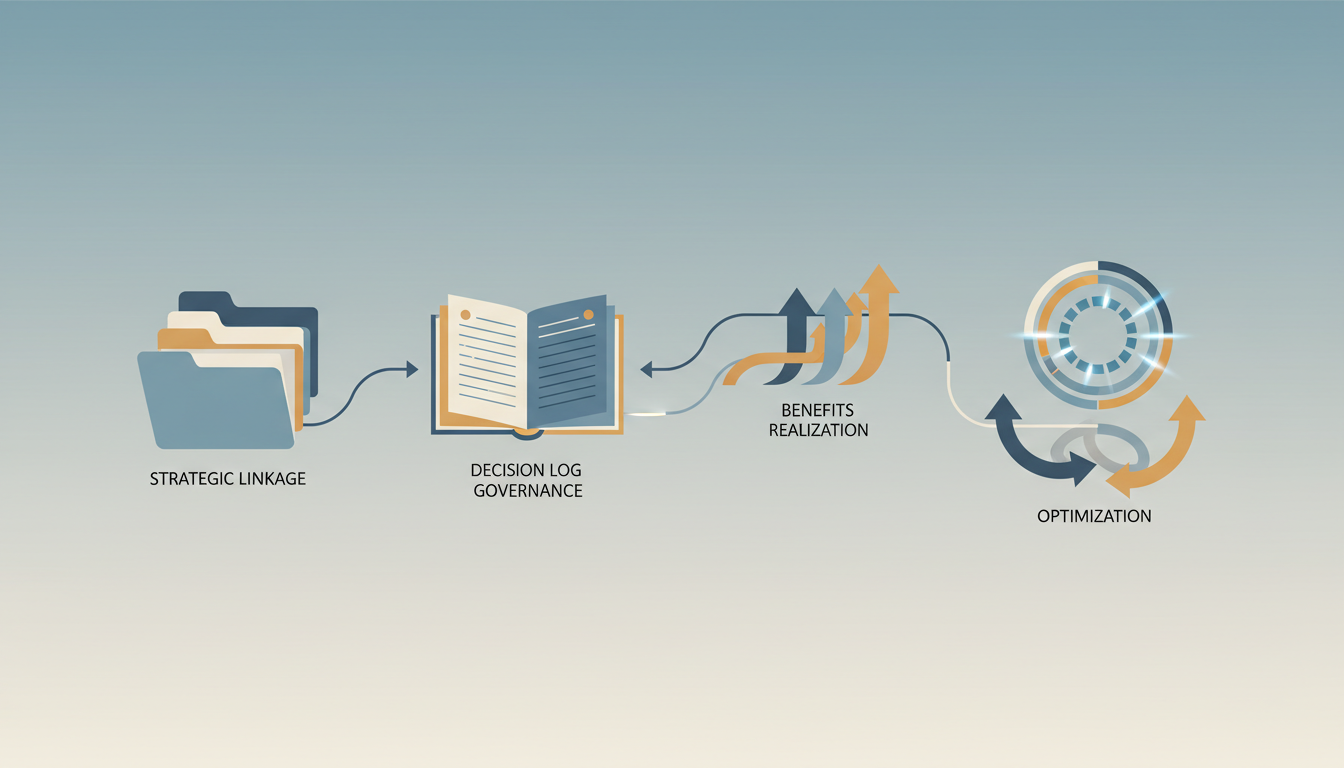
| Evidence Gap | Thin Infrastructure Description | Stronger Portfolio Evidence |
|---|---|---|
| Strategic Linkage | “Coordinated 12 infrastructure programs.” | “Prioritized programs against approved organizational objectives and updated the mix when priorities changed.” |
| Governance Artifacts | “Attended steering meetings and reported status.” | “Prepared decision information, recorded governance outcomes, and communicated approved actions.” |
| Benefits Tracking | “Delivered assets on time and within budget.” | “Tracked portfolio-level value measures and escalated variance affecting expected benefits.” |
| Optimization Decisions | “Managed resources across projects.” | “Rebalanced funding, capacity, or sequencing after comparative review of value, risk, and strategic fit.” |
Documented Strategic-Objective Linkage
The first gap is a missing line between the infrastructure work and the organization’s intended outcome. A road, facility, utility, or technology asset can be strategically important, but the application should show how you connected that investment to a stated objective and used that connection to make a portfolio decision.
A strong account names the objective, the criteria used to assess work, and the action taken when evidence changed. PMI’s portfolio standard describes portfolio work as evaluating, selecting, prioritizing, balancing, and authorizing components against organizational strategy and objectives.
Portfolio-Level Governance Artifacts
Status meetings alone do not prove governance. Governance becomes portfolio evidence when you can show decision rights, review cadence, criteria, escalation, records, and the decision that followed.
Describe your individual role accurately. You may have developed a scorecard, presented investment scenarios, maintained a decision register, recommended an action, or communicated an approved change. Those are more useful signals than saying you “supported governance” without explaining what you did.
Benefits-Realization Tracking at the Portfolio Level
Project metrics explain whether an individual component performed. Portfolio metrics explain whether the combined investment is creating the value the organization intended, including financial, operational, regulatory, resilience, or service outcomes.
We recommend naming the benefit measure you monitored, the variance you saw, and the portfolio action it informed. PMI describes portfolio performance management as systematic measurement and monitoring of organizational value against strategic goals in its performance guidance.
Evidence of Portfolio Optimization Decisions
This is often the missing proof. Infrastructure leaders may coordinate a fixed capital plan exceptionally well, but strategic portfolio work for PfMP requires evidence that the portfolio mix was reviewed, challenged, and adjusted.
Show where you compared competing initiatives, considered capacity or risk, and helped pause, resequence, fund, or remove work. If no component was cancelled, explain another real trade-off, such as shifting scarce specialist capacity or deferring a lower-priority initiative. For a broader definition, see our strategic work guide.
Reframe Infrastructure Experience Without Rewriting History
The goal is not to make delivery work sound grander. It is to identify the portfolio decisions already embedded in your work and describe them at the correct level. The most credible summaries remain specific, first person, and tied to records you can verify.
Map Programs to Organizational Strategy
Start with the organizational objective that shaped the investment portfolio. Then connect each relevant program to its intended contribution, expected benefit, and the measure used to test whether the contribution still held.
| Start With | Then Show | Application Result |
|---|---|---|
| Approved strategic objective | Program or initiative linked to that objective | Clear reason the work belonged in the portfolio |
| Prioritization criteria | How you scored, assessed, or compared work | Evidence of portfolio-level judgment |
| Changed assumption or constraint | How you reassessed the mix | Evidence of responsive strategic alignment |
| Expected value or benefit | How you monitored the measure | Evidence beyond delivery completion |
For leaders moving from program management, our transition guide explains the capability shift from coordinating related work to shaping the investment mix.
State Your Decision Rights Precisely
Use verbs that match your real authority. “I developed,” “I analyzed,” “I recommended,” “I escalated,” “I facilitated,” and “I monitored” are all useful when true. “I approved” belongs only where you held that authority.
This distinction matters because PMI’s panel looks for individual contribution, not a description of what the portfolio team or executive sponsor did. Explain the handoff from your analysis or recommendation to the governance decision, including how you recorded or communicated the outcome.
Close the Loop with a Verified Outcome
End the example with what changed because of the portfolio action. The outcome may be a revised roadmap, a different funding allocation, a changed sequence, an accepted risk response, or a benefit forecast that triggered review.
Do not force a financial result if your records do not support one. A well-supported decision and a clear consequence are stronger than an impressive but vague claim. Our panel review guide can help you stress-test whether each summary makes your own role visible.
Gather the Artifacts That Support Your Account
Strong summaries are easier to write when you collect the evidence before drafting. The point is not to attach every document to an application. It is to use reliable records to reconstruct what you did, why the decision occurred, and what changed afterward.
Keep the materials that reveal portfolio activity rather than only component execution:
- Strategy Traceability: Approved objectives, portfolio roadmaps, investment themes, and initiative-to-objective maps.
- Decision Evidence: Steering materials, decision logs, prioritization scorecards, approval records, and change communications.
- Value Evidence: Benefit dashboards, portfolio reports, forecast changes, and aggregate performance reviews.
- Optimization Evidence: Capacity analyses, funding reallocations, pause decisions, resequencing records, and risk-based trade-offs.
PMI notes that portfolio oversight can produce updated performance, resource, risk, financial, and governance information. Its oversight process also recognizes documented governance decisions as portfolio process assets.
We use these records to help candidates distinguish portfolio evidence from ordinary project reporting. If governance is the area where your draft feels thinnest, our governance coaching explains the difference between portfolio support and exam-only advice.
Start with two well-documented examples rather than trying to force every career assignment into one narrative. Reconstruct the strategic context, decision path, artifact trail, and practical outcome for each example. That process exposes unsupported claims early, gives your summaries a consistent structure, and leaves you with evidence you can explain confidently if reviewers request clarification.
Check Coverage Before You Submit
Eligibility and evidence quality are related but different questions. You can meet the required months of experience and still need clearer examples across the portfolio domains. Conversely, one strong strategic example does not by itself establish your full experience history.
PMI currently requires 96 months of professional business experience and either 84, 48, or 36 months of portfolio-management experience, depending on educational background. Its exam content also spans Strategic Alignment, Governance, Portfolio Performance, Risk Management, and Communications Management. Review the live eligibility requirements before submitting because certification policies can change.
Use a final coverage check:
- Strategic Alignment: Can you show how investments were mapped and prioritized against organizational objectives?
- Governance: Can you identify the review mechanism, your contribution, and a documented decision?
- Portfolio Performance: Can you explain portfolio-level value, benefits, or performance measures?
- Risk And Communications: Can you show how risks, stakeholders, or portfolio changes influenced decisions?
A full review should reveal whether your examples collectively cover the required practices, not simply whether you have held a portfolio-related job title. Our exam preparation resource helps connect that evidence to study work. Our readiness check helps identify which domain lacks evidence before you pay.
Work with Augment Consultancy
At Augment Consultancy, we help experienced infrastructure leaders turn genuine portfolio decisions into clear, defensible PfMP application evidence. We do not ask you to imitate a standard or inflate a delivery role. Instead, we review the strategy links, governance actions, benefit measures, and investment trade-offs that your own records can support. Our coaching focuses on the difficult middle ground between knowing portfolio management concepts and demonstrating your individual contribution under review. We can help you identify which portfolios cover the required domains, shape concise first-person summaries, and prepare for the panel review without manufacturing a narrative. If your work includes real prioritization, oversight, and value decisions but your current draft still reads like program delivery, start with a structured readiness conversation. Explore our portfolio certification support and choose the route that fits your evidence, schedule, and preparation needs at Augment Consultancy.
FAQs on Strategic Portfolio Work for PfMP
These questions separate valid infrastructure experience from evidence that makes its portfolio-level contribution visible. They also reinforce a basic rule: describe verified decisions, not aspirations.
Does Infrastructure Portfolio Management Count for PfMP?
Yes, when you show how you prioritized, governed, measured benefits, or rebalanced investments against organizational objectives. Delivery coordination alone does not demonstrate those portfolio decisions.
What Counts as Strategic Portfolio Work for PMI?
PMI expects evidence that you personally applied portfolio practices, explained why they were used, and reported relevant results, rather than restating theory or describing team activity.
How Do I Prove Strategic Alignment in a PfMP Application?
Use an approved objective, prioritization criterion, influenced decision, and resulting portfolio change. Keep that connection factual, traceable, and written in first person throughout your summary.
What Evidence Should I Keep for My Application?
Keep strategic roadmaps, scoring records, governance decisions, benefit dashboards, and capacity or funding changes. Use them to recall your actions accurately, not to substitute for experience.
Must I Have Personally Approved Funding Decisions?
No. You can describe recommendations, analysis, escalation, or decision administration when those were your responsibilities. Clearly separate your contribution from decisions made by sponsors or governance bodies.