PfMP Certification Support: A 3-Tier Self-Assessment Before You Pay | Augment Consultancy
Use a three-tier PfMP readiness self-assessment to audit eligibility, domain fluency and application evidence before paying for support.

PfMP is built for senior practitioners making organisation-wide investment choices, not simply delivering individual projects. PMI’s 170-question PfMP exam makes application evidence and scenario judgment as important as study time. This guide shows how to identify the specific readiness gap before committing to paid support.
PfMP certification readiness self assessment is worth doing before you pay for coaching because it separates three problems that need different fixes: eligibility, domain fluency, and application evidence. Pay only when a diagnosed gap needs expert feedback; self-study is often enough when your dates, examples, and scenario reasoning are already solid.
PfMP Certification Readiness Self Assessment Starts with the Commitment
The credential path has two distinct hurdles: convincing reviewers that your portfolio experience qualifies, then demonstrating sound judgment in a four-hour examination. That distinction matters because a strong mock-exam score cannot repair an unsupported experience claim, and polished application prose cannot substitute for domain knowledge.
Start by treating costs in two groups. PMI certification fees are separate from optional preparation costs, and PMI notes that PfMP pricing varies by region and membership status. Training, templates, review services, and coaching are optional. Before buying any of them, use our senior leaders’ guide to confirm that PfMP matches the scope of work you actually perform.
A PfMP certification readiness self assessment also ties preparation costs to a specific decision. It avoids the
| Requirement Route | Professional Business Experience | Portfolio Management Experience |
|---|---|---|
| Secondary Degree | 96 months within the past 15 years | 84 months within the past 15 years |
| Bachelor’s Degree Or Higher | 96 months within the past 15 years | 48 months within the past 15 years |
| GAC-Accredited Bachelor’s Degree Or Higher | 96 months within the past 15 years | 36 months within the past 15 years |
A PfMP certification readiness self assessment should therefore begin with facts, not confidence. Collect dates, roles, portfolios, outcomes, and people who could verify the work before you compare any support package.
Tier 1: Eligibility and Experience Mapping
Eligibility is the first readiness tier because it is the one gap that paid support cannot solve. PMI requires documented professional portfolio-management experience, and its PfMP requirements distinguish that work from leading a project or managing a programme.

Use a Tier 1 PfMP certification readiness self assessment to evaluate your experience. This assessment
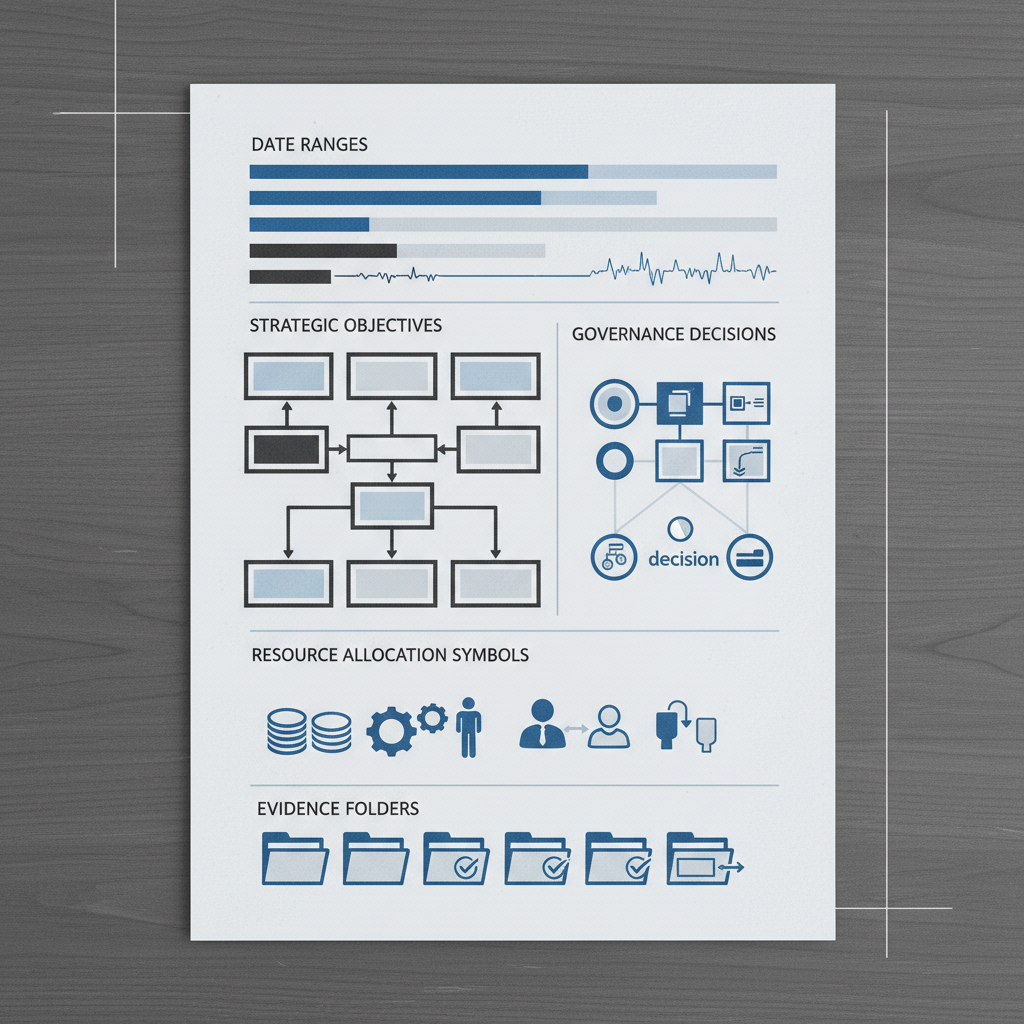
Build an experience map for every portfolio you may report. Record the start and end dates, strategic objective, component investments, governance decisions, resource trade-offs, and your individual contribution. Count overlapping months once. If you managed two portfolios during the same quarter, that quarter remains three months of experience, not six.
Your map should also identify where each example fits across Strategic Alignment, Governance, Portfolio Performance, Portfolio Risk Management, and Communications Management. Experience can be spread across multiple portfolios, but your evidence needs to show coverage of all five areas. If you are unsure whether a role involved portfolio-level authority, review our guide to strategic portfolio work.
Use these verdicts after mapping your work:
- Green: You meet an eligibility route, can explain personal portfolio decisions, and can identify evidence for each reported role.
- Yellow: Your dates appear sufficient, but your examples sound like project or programme delivery, or your domain coverage is uneven.
- Red: You lack the required months, cannot verify the roles, or cannot show portfolio-level decision-making.
A PfMP certification readiness self assessment makes this tier useful because it distinguishes a fixable evidence problem from a career-experience gap. Templates can help a green candidate organise evidence. A yellow candidate may benefit from a narrow application review. A red candidate should wait, build qualifying experience, and avoid paying for support that cannot change PMI’s eligibility rules.
Tier 2: Test Domain Fluency Before Buying More Questions
The second tier asks whether you can reason like a portfolio manager when the facts are incomplete. A PfMP certification readiness self assessment is more useful when it tests decisions, not definitions, because the exam weights Strategic Alignment and Portfolio Performance at 25% each, Governance at 20%, and Risk and Communications at 15% each.

Create a 10-question self-test with two scenario questions for each domain. After choosing an answer, write one sentence explaining why the portfolio-level decision is better than the alternatives. If you cannot explain the strategic trade-off, escalation path, or value decision, do not mistake a correct guess for readiness.
domain-focused PfMP certification readiness self assessment), content instruction, decision practice, confidence under timed conditions
A practical scoring method is simple:
- 8 to 10 correct: Use self-directed study, then target any weak domain with scenario practice.
- 6 to 7 correct: Consider focused instruction or feedback, especially if weaknesses sit in Strategic Alignment or Portfolio Performance.
- 0 to 5 correct: Structured teaching and regular debriefs are likely more valuable than buying another bank of questions.
The point is not to imitate PMI scoring. It is to decide whether your gap is recall, judgment, or confidence under pressure. Our scenario framework can help you make that distinction before you commit to coaching.

Tier 3: Audit Your Application Artifacts
The third tier is the application artifact audit. Here, PfMP certification readiness self assessment means asking whether every important claim can be evidenced, verified, and explained in the first person. A qualified candidate can still create avoidable risk with vague dates, team-based language, unsupported claims, or examples that repeat textbook terminology.
The PfMP handbook advises candidates to prepare summaries of roughly 300 to 500 words that show how they applied portfolio-management concepts, why they applied them, and what happened as a result. Reviewers want your individual contribution, not a generic description of what “we” did. Our application review guide shows how to turn real decisions into focused evidence.
self-assessment should test each claimed result. Test each against a document,
Before submission, complete this artifact checklist:
- Identity evidence: Degree or diploma copy available and consistent with the application route.
- Experience evidence: Employment details, role dates, and portfolio names reconciled with your CV and records.
- Verification path: A supervisor or manager identified for each experience entry.
- Domain evidence: A first-person example available for each of the five domains.
- Outcome evidence: Decisions connected to strategic alignment, governance, performance, risk, communications, or measurable results.
- Language quality: Clear explanations of your actions, without copied standards language or inflated responsibility.
PMI states that candidates selected for audit receive 90 days to submit requested documentation, and a complete audit generally takes five to seven business days. This is where a targeted reviewer can be worth paying for: not to invent experience, but to help you expose the evidence you already possess.
Match Support to the Gap, Not the Biggest Package
Once you have scored all three tiers, choose the smallest support model that solves your actual problem. The right answer for a well-qualified executive with weak application artifacts is not automatically full coaching. Equally, a candidate who cannot reason through core domains may need more than a template.

A PfMP certification readiness self assessment should guide this choice. It matches the support model to
| Support Model | Usually Includes | Best For | What It Cannot Fix | Cost Question To Ask |
|---|---|---|---|---|
| Templates And Self-Study | Checklists, experience maps, study plans, question reviews | Green candidates | Missing eligibility or weak portfolio judgment | What is included, and how long does access last? |
| Application Review | Feedback on evidence, domain coverage, clarity, and first-person writing | Yellow Tier 3 candidates | Missing qualifying experience or PMI decisions | How many rounds and what turnaround time are included? |
| Full Coaching | Diagnosis, instruction, scenario feedback, milestones, and application guidance | Multiple yellow or red readiness gaps | Fabricating experience or guaranteeing approval | What is the total price, duration, and feedback scope? |
When comparing options, inspect inclusions instead of labels. A service described as “coaching” may be an asynchronous template library, while a modestly priced review may include detailed evidence feedback. Compare those differences against our training options before deciding what to buy.
A PfMP certification readiness self-assessment supports application feedback if you have qualifying experience but disorganized examples
Evaluate Providers with Evidence, Not Promises
A provider should be able to explain exactly what it will review, teach, and challenge. Ask whether its material follows the current PfMP blueprint, how feedback is delivered, who provides it, and whether the instructor has relevant credentialed portfolio-management experience.
Your PfMP certification readiness self assessment should remain the reference point during these conversations, because provider quality only matters when the service addresses your documented gap.
Track-record claims also need context. Ask for the cohort size, time period, definition of a first attempt, and whether the provider supported the application, the exam, or both. A large practice-question library can be useful, but volume alone does not prove that it teaches the portfolio mindset needed for situational questions. Our article on practice-test reality explains why debrief quality matters as much as question count.
If a provider claims PMI Authorised Training Partner status, verify the claim through PMI’s directory. PMI says authorised partners use official content and offer training aligned to its standards, but authorisation should be one quality signal among several. You still need a scope, feedback model, support window, and instructor fit that match your own PfMP certification readiness self assessment.

Work with Augment Consultancy
At Augment Consultancy, we begin with the decision candidates often skip: whether paid support is actually warranted. Our certified PgMP® and PfMP® professionals help experienced leaders translate real portfolio decisions into clear, first-person evidence, then build the domain fluency needed for scenario-based questions. We do not promise eligibility, panel approval, audit clearance, or an exam result, because those outcomes remain PMI’s decisions and depend on your own experience and preparation. Instead, we help you identify the narrowest useful form of support, whether that means a structured self-study path, application feedback, or coached preparation. Bring your experience map, your current artifacts, and your unanswered questions. We will help you test the evidence before you spend more time or money, then choose a preparation route that matches your readiness. Use our learning resources to prepare deliberately, communicate precisely, and stay accountable at every stage of the process. Explore Augment Consultancy
FAQs on PfMP Certification Readiness Self Assessment
These answers clarify how to use a PfMP certification readiness self assessment without mistaking it for an eligibility ruling, audit guarantee, or exam-pass promise.
What Does PfMP Audit Risk Mean?
PMI can select applications for audit, requesting degrees and supervisor verification. Prepare records before submitting because incomplete evidence can pause your certification process and delay eligibility.
How Should I Calculate Return on Investment?
Calculate ROI by comparing your total certification and support outlay with employer funding and credible role opportunities. Also consider
How Do I Evaluate a PfMP Training Provider?
active). "diagnosed gap" (adjective/participle, but "diagnosed"
Does This Assessment Also Apply to PgMP?
Use the same evidence discipline, but do not treat credentials as interchangeable. PgMP assesses project and program management experience, while PfMP assesses portfolio-management experience and strategic investment decisions.
Can Paid Support Make Me Eligible?
can help organise, explain, and practise your genuine experience, but it cannot supply missing qualifying months,