PfMP Exam vs. Practice Tests: Why Scenario-Based Questions Feel Completely Different


TL;DR
We explain why the PfMP exam vs. practice tests gap is usually a shift from recall to scenario-based portfolio judgment, not proof that the exam is random. We compare original question styles, show how to turn drills into scenarios, explain what a score can and cannot show, and clarify the computer-based format.
PMI currently lists the PfMP exam at 170 questions. It is designed to assess portfolio leadership, where strategic choices, governance, and capacity constraints matter together.
The PfMP Exam Vs. Practice Tests gap usually reflects question design, not randomness. Many practice items ask for a definition, tool, or process step, while PMI assesses whether you can apply portfolio management to an on-the-job scenario. The better answer normally protects strategic value, governance, capacity, and portfolio balance together.
We will compare the two question styles, explain the judgment shift behind them, show how to upgrade ordinary drills, and clarify what practice scores and exam format can actually tell you.
Why PfMP Practice Tests Can Feel Structurally Different
Portfolio management is not project delivery at a larger scale. PMI’s portfolio standard frames it as choosing the right work, while projects and programs focus on doing work right. That distinction changes what a strong answer looks like when four answers seem reasonable.
A recall item may ask you to identify a prioritization technique, a governance artifact, or the purpose of a risk register. Those questions still have value because they reveal gaps in vocabulary. The problem begins when a candidate treats recall fluency as proof that they can make a portfolio-level recommendation under conflicting conditions.
| Question Design | What It Primarily Tests | Common Wrong Move |
|---|---|---|
| Definition recall | Recognition of a term or artifact | Choosing the familiar label |
| Process-step recall | Knowledge of a sequence | Applying the sequence without context |
| Scenario judgment | Strategic and governance reasoning | Fixing one component instead of balancing the portfolio |
| Ambiguous scenario | Selection of the best available action | Treating every plausible answer as equally correct |
The official PfMP outline assigns 25% each to Strategic Alignment and Portfolio Performance, with Governance at 20%. That weighting makes it risky to study only artifacts and formulas. When your background is stronger in delivery than portfolio leadership, use our portfolio diagnostic to spot where component thinking is still shaping your choices.
PfMP Exam vs. Practice Tests: The Same Topic, Two Different Questions
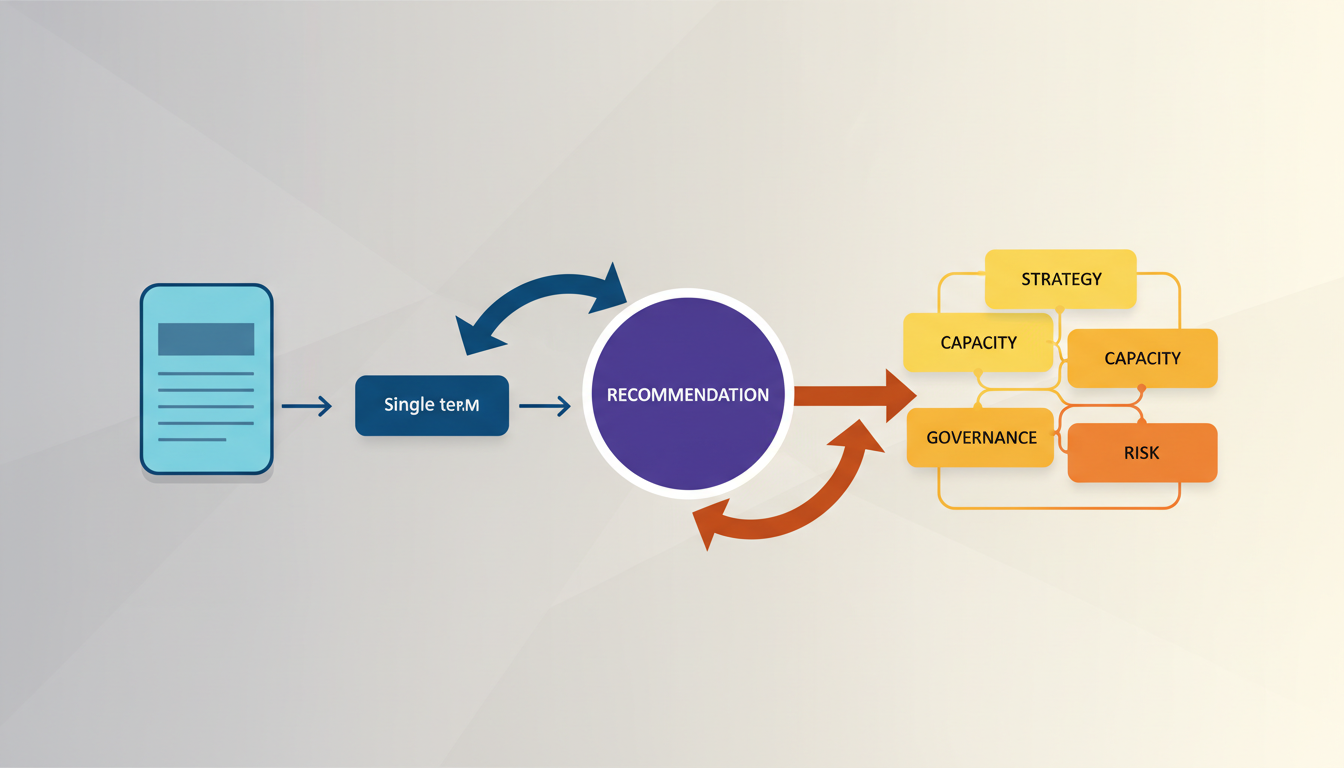
The difference becomes clearer when the topic stays constant. The examples below are original illustrations, not recalled exam items. They reflect the ECO’s focus on analyzing portfolio scenarios, prioritizing components, and making recommendations through governance.
What the Recall Item Rewards
A recall-style question might ask which action provides governance with a rationale for a portfolio decision. The learner identifies “recommend portfolio scenarios based on prioritization analysis” and moves on. That is useful knowledge, but the question does not require the learner to decide which facts would change the recommendation.
| Element | Recall-Style Prompt | Scenario-Style Prompt |
|---|---|---|
| Situation | Which action supports a governance decision? | Capacity falls while a new strategic priority emerges |
| Decision | Identify the relevant activity | Choose the best first portfolio-level action |
| Correct Logic | Recognize the portfolio scenario concept | Reassess priorities, compare scenarios, then recommend through governance |
| Distractor Risk | Selecting a related artifact | Optimizing a single project or bypassing decision rights |
What the Scenario Item Changes
Now add a constraint: a high-return component consumes scarce capacity, but the organization has changed its strategic priority. A project-focused answer may protect the component’s schedule or ask its manager for a revised estimate. A portfolio answer first considers the changed strategy, established prioritization criteria, capacity implications, and the recommendation that governance needs to make an informed decision.
That is why scenario questions can feel uncomfortable even when you know the terminology. They ask you to decide what matters most before deciding what to do.
How to Eliminate Plausible Distractors
We teach candidates to identify what level each option is operating at before judging its wording. Our situational-question framework helps make that move repeatable under time pressure.
- Component-First Fix: A good local action may still be wrong if it ignores portfolio tradeoffs.
- Unauthorized Action: A portfolio manager may recommend and escalate, but should not quietly replace governance decision rights.
- Metric-Only Response: A dashboard can reveal a problem, but it does not itself resolve strategic misalignment.
- Efficiency Trap: Better resource utilization is not automatically the best answer if it weakens strategic value or portfolio balance.
How to Convert Recall Questions into Scenarios
We use a simple exercise to turn passive familiarity into applied judgment: after answering any practice item, ask, “In what situation would this answer be wrong?” That question exposes whether you know the rule only in isolation or can recognize the boundary around it.
Start with a manageable set of questions from your normal study routine. Our study approach works best when each answer becomes a short reasoning exercise instead of another score in a spreadsheet.
Start with the Correct Answer
Write down why the answer is correct in its original setting. Then name the portfolio outcome it supports: strategic fit, governance quality, value delivery, capacity balance, risk appetite, or stakeholder alignment. If you cannot name the outcome, you may be memorizing the wording rather than the purpose.
Change One Condition
Introduce one changed fact and ask whether the same answer still holds. Useful scenario changes include:
- Strategy: A new organizational objective changes the relative value of components.
- Capacity: A critical resource becomes constrained across several initiatives.
- Governance: The decision requires approval from a defined portfolio authority.
- Risk: Aggregate exposure exceeds the organization’s stated tolerance.

Record the Reasoning Failure
Do not label every missed question as a knowledge gap. Record whether you chose the wrong management level, ignored a strategic shift, skipped an approval path, or optimized an individual component. That error log is more useful than a raw percentage because it tells you what to practise next. When you want a broader readiness view, use our PfMP support test.
How to Judge PfMP Practice-Test Accuracy
A practice score can be useful, but it is not a prediction model. PMI’s PfMP handbook says exam questions are independently validated, psychometrically monitored, and mapped to the examination content outline. A third-party question bank can support study without replicating every feature of that process.
We use scenario-realism ratings as an audit tool, not as a claim that any resource can reveal the live exam. The rating asks whether the material forces portfolio-level judgment, contains believable distractors, gives reasoning for incorrect options, and follows the published domain blueprint.
| Resource Type | Scenario-Realism Rating | Best Use |
|---|---|---|
| Official exam outline | Not Rated | Confirming what domains and tasks are tested |
| Portfolio management standard | 1/5 | Building concepts and portfolio vocabulary |
| Definition-heavy question bank | 2/5 | Finding recall gaps quickly |
| Audited scenario bank with explanations | 4/5 | Practising reasoning and distractor elimination |
| Your converted scenario set | 5/5 | Testing how changed conditions affect the answer |
Use full-length sessions to build pacing and stamina, but use shorter review sessions to improve judgment. If you are deciding how much structure you need, compare self-study options with flexible training formats before choosing a routine.
What the Exam Format Does and Does Not Explain
An unfamiliar question does not prove the exam has changed the rules halfway through. The PfMP handbook describes computer-based testing, 170 total questions, 240 minutes, and 20 unscored pretest questions placed randomly throughout the exam.
Pretest questions can feel unfamiliar because they are being evaluated for future use, but they do not affect your score. More importantly, PMI’s published PfMP material describes computer-based delivery and randomly placed questions, not adaptive testing. A difficult item is therefore not evidence that the test changed difficulty in response to your previous answer.
The practical response is not to hunt for a secret pattern. Read for the management level, locate the strategic or governance constraint, eliminate actions that bypass decision rights, and choose the option that best serves the portfolio as a whole. If you need help separating exam technique from genuine governance judgment, our mentoring guide explains the difference.
Prepare with Augment Consultancy
At Augment Consultancy, we teach the judgment behind an answer, not a ritual for memorizing one. Our preparation work starts by checking whether you can separate a component problem from a portfolio decision, identify the decision owner, and explain what strategic evidence changes the recommendation. Then we use timed practice, answer reviews, and scenario conversion so weak scores become a specific next study task. If your sticking point is governance, strategic alignment, or resource balancing, we can help you choose a study path that fits your experience and calendar. You will leave each review knowing what premise you missed, what distractor pulled you off course, and how to test the same concept under a changed condition. We also keep the work centered on decisions a portfolio manager can influence, rather than project execution detail that belongs elsewhere. Begin with Augment Consultancy.
FAQs on PfMP Exam vs. Practice Tests
Are PfMP Questions Scenario-Based?
Yes. PMI assesses applied workplace judgment, so scenario questions require you to interpret context, identify portfolio priorities, respect governance, and select the best response available.
Are Practice-Test Scores Reliable?
No. A score reflects performance on one item set, not a predicted result. Use it to identify repeated reasoning mistakes and guide your next review.
Is the PfMP Exam Adaptive?
No. PMI describes computer-based testing and randomly placed questions, not adaptive testing. A harder item is not documented evidence that previous answers changed later difficulty.
How Many Questions and Minutes Does the PfMP Exam Have?
PMI lists 170 questions and 240 minutes. Its handbook states that 20 questions are unscored pretest items, placed randomly throughout the examination during live testing.