PgMP Application Panel Review vs. Exam: Failure Rates, Common Pitfalls, and Prep Effort Allocation Compared
Compare PgMP panel review and exam failure-rate data, common pitfalls, and a practical prep-time allocation for both gates.

The PgMP path asks experienced leaders to clear two very different gates, not simply sit one harder test. The final assessment contains 170 multiple-choice questions in 240 minutes, according to the PMI handbook.
PMI does not publish separate PgMP panel-review and exam failure rates, so no credible source can prove that one gate fails more candidates than the other. The panel tests whether your personal experience demonstrates program-level strategy, leadership, and governance; the exam tests applied judgment across a published content blueprint.
We built this comparison to show what is known, what is not disclosed, where candidates commonly lose ground, and how we would divide active preparation time between application evidence and exam practice.
PgMP Application Panel Review vs. Exam: What Failure-Rate Data Shows
The most accurate answer to “which gate has the higher failure rate?” is that PMI does not say. It publishes the process, assessment requirements, and retake rules, but not a panel pass rate, an exam pass rate, or a comparison between them. Any precise split presented as an industry fact should therefore be treated cautiously.
The two gates do have different consequences. A candidate whose summary prompts are unsatisfactory receives feedback and one opportunity to amend them. A second unsuccessful panel review closes the application. Candidates who pass the panel can take the exam up to three times during a one-year eligibility period under PMI’s published policy.
That does not make the panel “more subjective” in the sense of being arbitrary. It is a review of professional evidence, while the exam is a standardized test. The useful question is not which is statistically harder, but whether your current risk is evidence quality or exam performance. Our panel review comparison helps candidates make that distinction before they commit most of their study time.
The Two Gates Side by Side
The application panel review asks, “Have you actually led programs at the required level?” The exam asks, “Can you consistently apply program-management judgment across tested scenarios?” Keeping those jobs separate prevents a common mistake: treating a polished application as proof of exam readiness, or strong practice scores as proof that a panel will understand your experience.
| Comparison Point | Application Panel Review | Examination |
|---|---|---|
| Published failure rate | Not publicly disclosed by PMI | Not publicly disclosed by PMI |
| Assessment format | Review of experience summaries | Multiple-choice examination |
| Primary evidence | Personal program-management decisions and results | Applied answers across the published blueprint |
| Core test | Program-level strategic, leadership, and governance experience | Program-management knowledge and situational judgment |
| Retry rule | One amendment opportunity after an unsuccessful review | Up to three attempts in one year |
| Time constraint | Drafting and evidence quality | 240 minutes for 170 questions |
| Our active-prep baseline | 20% | 80% |
PMI states that 150 of the 170 questions are scored and 20 are unscored pretest questions, while the exam blueprint assigns different weights to five performance domains. That makes blueprint-led practice more reliable than giving every topic equal attention. For the evidence gate, use our documentation rubric to test whether each example proves responsibility, decision-making, and outcomes rather than activity alone.
Decoding Panel Review Subjectivity
The panel can feel subjective because reviewers are evaluating a written account of work that happened in a specific organization, under conditions they cannot see firsthand. Our practical interpretation is that candidates should make their strategic thinking observable, not assume experience will be inferred from job titles or tool names.
What the Safeguards Actually Do
PMI says the review panel consists of PgMP-certified program-management subject-matter experts who are trained and calibrated to assess responses. PMI also withholds the candidate’s identity from reviewers to reduce potential bias. Those safeguards do not produce a public numeric score, but they do mean the review follows a structured assessment process described in the certification handbook.
What Strategic Thinking Means in Practice
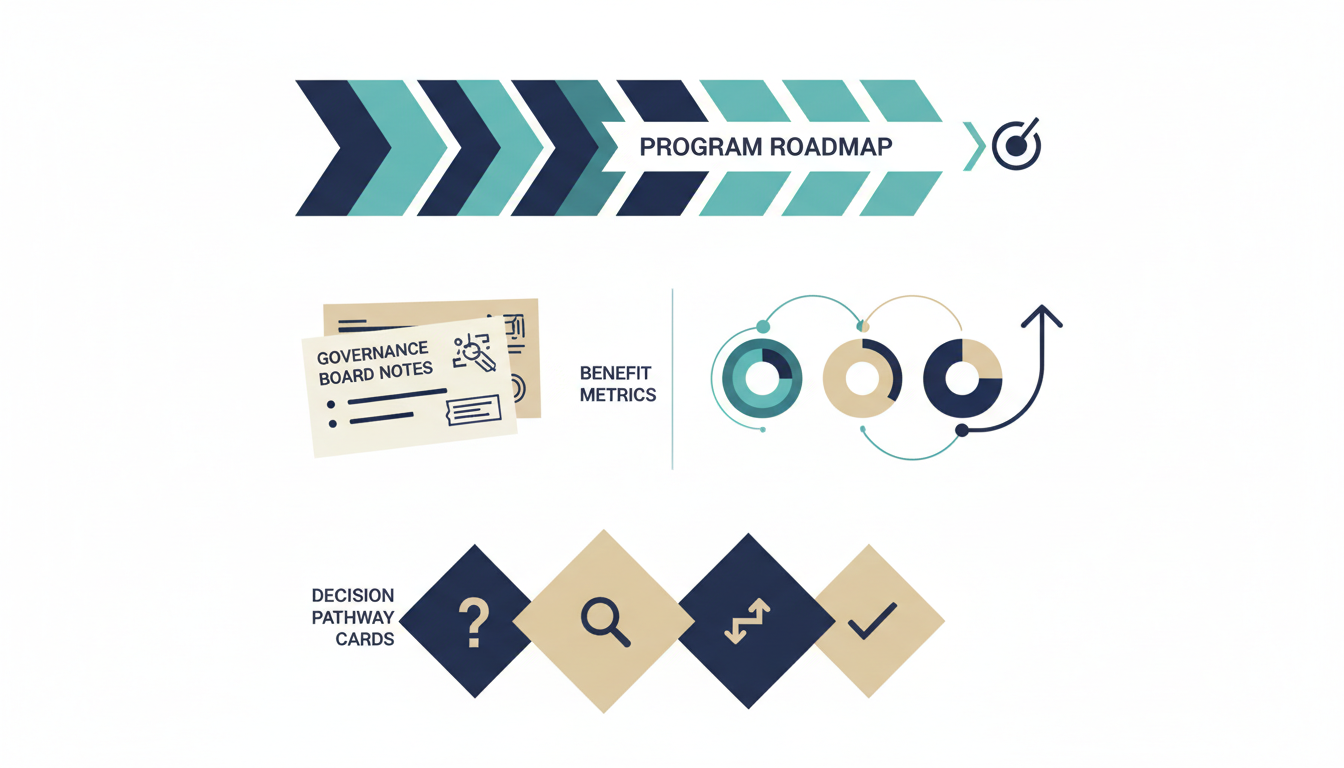
Strategic thinking is not a sentence saying a program aligned with strategy. It is evidence that you assessed the business need, connected related components to a common objective, defined or refined a roadmap, managed trade-offs, and tracked benefits or outcomes. Strong summaries show what you personally decided, why you chose that path, and what changed as a result.
Candidates who come from nonstandard environments often have the right experience but describe it as delivery coordination. Our experience-mapping guide can help translate real program work into evidence the panel can evaluate without turning it into generic textbook language.
How Governance Maturity Is Assessed
Governance maturity becomes visible when a summary explains decision rights, reporting, escalations, stage-gate approvals, performance measures, and how you kept the program aligned as conditions changed. PMI’s exam outline describes governance work that includes establishing frameworks, seeking approvals through stage-gate reviews, monitoring key performance indicators, and escalating risks to the appropriate level in its governance tasks.
Panel Subjectivity Decoder Checklist
Before submission, we would check each selected summary against the following questions:
- Prompt coverage: Did you answer every part of the prompt, not merely its most familiar part?
- Personal authority: Does “I” identify your decisions, influence, and accountability?
- Program scope: Are multiple related components tied to one organizational objective and benefits?
- Governance evidence: Did you show approvals, escalation paths, reports, metrics, or decision forums?
- Specificity: Do examples include the context, action, rationale, and measurable result?
- Professional voice: Does the summary describe lived experience rather than repeat a definition?
Avoiding the Exam Pitfalls
The exam is not a second version of the application. It measures whether you can select the best program-management response when several options may sound plausible. The practical risk is usually not memorizing a single definition. It is misreading the decision context, missing the program-level implication, or spending too long on one scenario.
Study to the Published Blueprint
The five domains do not carry equal weight. Program Life Cycle Management represents 44% of the exam, followed by Stakeholder Engagement at 16%, Strategic Program Alignment at 15%, Governance at 14%, and Benefits Alignment at 11%.
| Exam Domain | Weight | What to Practice |
|---|---|---|
| Program Life Cycle Management | 44% | Integration, component interdependencies, delivery, transition, and corrective actions |
| Stakeholder Engagement | 16% | Sponsor alignment, stakeholder analysis, communications, and negotiation |
| Strategic Program Alignment | 15% | Business cases, roadmaps, objectives, risks, and expected benefits |
| Governance | 14% | Decision structures, approvals, KPIs, escalation, and reporting |
| Benefits Alignment | 11% | Benefits plans, measures, sustainment, and transition to operations |
The purpose of those weights is not to neglect smaller domains. It is to prevent a study plan from underinvesting in the largest tested body of work. PMI’s current exam outline should remain the reference point for domain coverage.
Treat Scenario Reading as a Skill
Scenario questions often include several facts that are true but not decisive. We recommend identifying the program objective, the decision authority, the life-cycle point, and the benefit or risk at stake before reading the options twice. This limits the PMP-trained instinct to solve a local project problem when the scenario calls for a program-level decision.
Build Timed Decision Practice
Four hours can sound generous until fatigue and dense scenarios arrive. Timed sets should teach you when to move on, how to flag uncertainty, and which missed questions reveal a repeatable reasoning gap. Our exam prep playbook is designed to make domain review and scenario practice work together rather than compete for attention.
Building an Eight-Week Two-Gate Plan
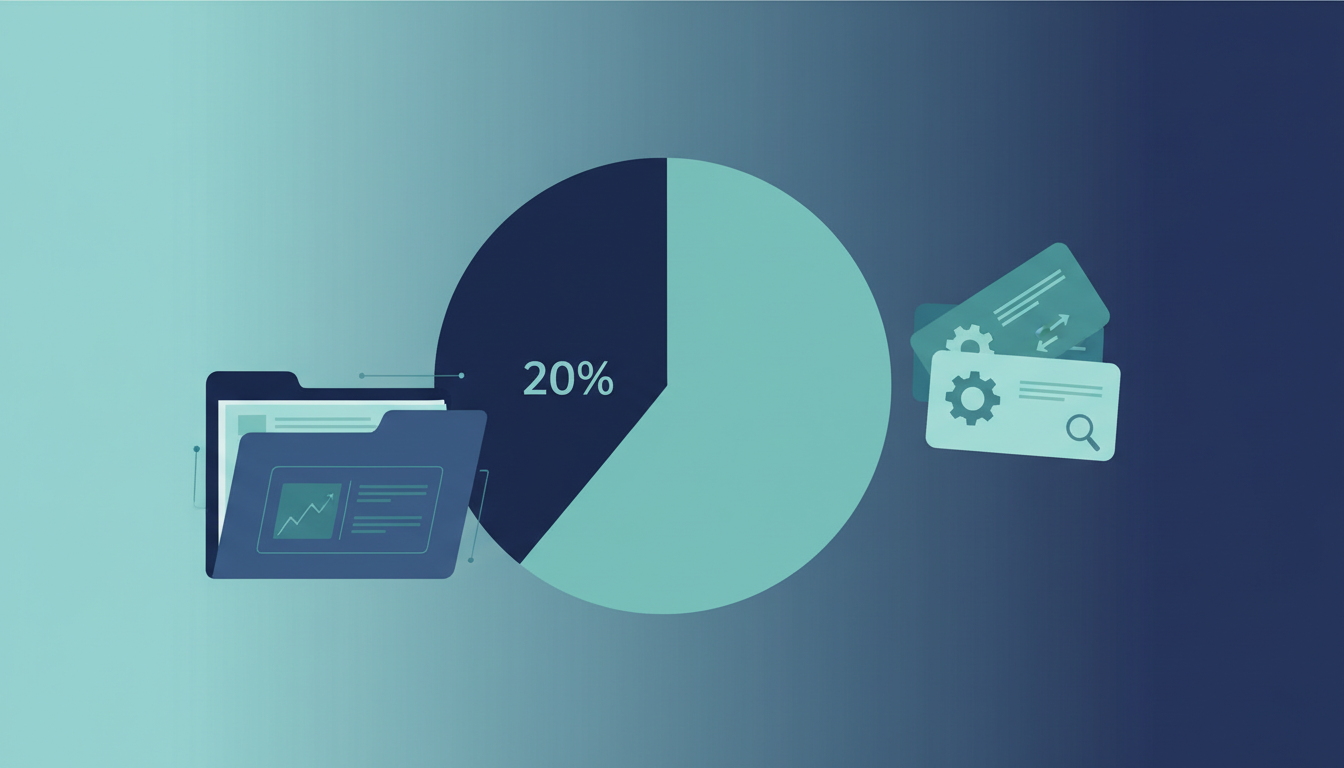
We recommend an 80/20 baseline for active preparation time: 80% for exam-domain learning and timed scenario practice, and 20% for application evidence, drafting, and self-review. It is an editorial starting point, not a PMI rule. PMI’s older survey of credential holders reported a median of 16 to 24 hours for application review and 73 to 80 hours for the multiple-choice exam, which broadly supports protecting most active effort for the exam while treating the application seriously.
| Prep Work | Our Baseline Share | When to Increase It |
|---|---|---|
| Application evidence and summaries | 20% | Your examples lack strategic ownership, governance decisions, benefits, or measurable outcomes |
| Exam domains and scenario practice | 80% | You have an evidence-complete application and need stronger accuracy, pace, or domain recall |
Candidates who need help judging the difference between generic advice and feedback on their own evidence can compare personalized support before committing to a preparation format.
Follow the Two-Gate Timeline
- Weeks One and Two: Confirm eligibility, map programs and component projects, gather strategic and governance evidence, and draft the experience summaries.
- Weeks Three and Four: Review every summary against the selected prompt, then begin focused work on Program Life Cycle Management and Strategic Program Alignment.
- Weeks Five and Six: Cover Benefits Alignment, Stakeholder Engagement, and Governance while building an error log from scenario-based practice.
- Week Seven: Complete a timed 170-question simulation, isolate recurring reasoning errors, and revisit weak domains.
- Week Eight: Finalize application quality checks, review high-risk exam topics, and schedule the next action with a clear readiness decision.
The calendar should separate your work from PMI processing time. PMI says the panel-review process takes approximately 60 days, so a complete plan needs room for both candidate preparation and the formal review window. Our PgMP training methodology can help you coordinate both gates without sacrificing the exam work that follows.
Prepare with Augment Consultancy
At Augment Consultancy, we help experienced program leaders prepare for the two decisions that shape their PgMP path: whether their evidence truly reflects program management, and whether their exam practice matches PMI’s blueprint.
Our PgMP training begins with your own programs, decisions, benefits, governance, and stakeholder context. We then help you turn that material into clear first-person evidence before directing study time toward the scenarios most likely to expose a knowledge gap.
We do not treat a strong application as a substitute for exam preparation, or exam scores as proof that a summary will survive review. Instead, we use the two-gate model in this article to organize your work, identify weak evidence early, and build confidence without inventing pass-rate claims.
It keeps momentum focused through each gate and across every revision cycle. Use our learning portal to keep progress visible across the week.
Explore the next step with Augment Consultancy.
FAQs on PgMP Application Panel Review vs. Exam
Is the Panel Review More Subjective Than the Exam?
Yes. Reviewers evaluate written evidence of your real decisions, while exam scoring is standardized. PMI says trained, calibrated, anonymous PgMP professionals conduct the panel assessment.
Does PMI Publish a PgMP Panel Review Failure Rate?
No. PMI publishes review steps, amendment rules, and eligibility consequences, but its public materials provide no panel pass rate, exam pass rate, or gate-by-gate comparison.
How Should PMP Holders Adapt Their Application?
Begin with evidence mapping, because PMP delivery stories can sound too project-focused. Write concise, verifiable first-person summaries showing program-level strategy, leadership, governance, and results.
What Is the PgMP Exam Time Limit?
PMI allows 240 minutes for 170 questions, including 20 unscored pretest items. That pace makes scenario reading and disciplined decisions as important as knowledge recall.
Should I Spend More Time on the Application or the Exam?
Use a 20/80 application-to-exam baseline. Shift more time toward application work only when your evidence lacks strategy, governance, benefits, personal authority, or measurable results.
Can PgMP Training Help with Both Gates?
Yes. Effective PgMP training combines application feedback with blueprint-based scenario practice, helping candidates strengthen evidence first and then diagnose recurring domain gaps behind missed questions.