When Is PgMP Coaching Worth Paying For?
Decide when PgMP coaching is worth paying for, compare support routes, plan study around work, and assess a nine-month team target.

PgMP is a senior credential with eligibility routes requiring 36 to 84 months of program-management experience, depending on education and credentials, under PMI eligibility. That level of evidence is why choosing help should be an application decision first, not a course-shopping exercise, and this guide shows how to make it.
PgMP coaching is worth paying for when uncertainty about eligibility, qualifying programs, experience summaries, panel-review expectations, or study discipline could delay your attempt. If you can already document related projects, strategic benefits, governance, and program-level decisions, self-study may fit. Otherwise, targeted application review is often the sensible first investment.
When Is PgMP Coaching Worth Paying For?
The decision is less about whether you are capable of passing an exam and more about whether you can prove the right kind of leadership experience. We recommend paying for help only where a defined gap exists, such as evidence selection, application writing, accountability, or exam judgment.
A practical readiness score prevents two expensive mistakes: buying complete support when focused feedback would do, or starting with self-study when the application itself is still uncertain.

Use a Five-Factor Readiness Check
Score yourself from zero to two in each area. Zero means you cannot name concrete evidence, one means you contributed but did not own decisions, and two means you can document your leadership and results.
| Readiness Score | What It Usually Means | Sensible Support Route |
|---|---|---|
| 0 to 4 | Evidence is incomplete or project-focused | Pause the exam decision, clarify eligibility first |
| 5 to 7 | Experience is plausible but needs translation | Application review or targeted mentoring |
| 8 to 10 | Evidence and study discipline are already strong | Self-study or focused exam preparation |
- Strategic Alignment: Can you show how the program supported an organizational objective, business case, or mission?
- Benefits Ownership: Can you explain measurable benefits, sustainment, and decisions made to protect value?
- Governance: Can you name sponsors, decision forums, escalation paths, and trade-offs you managed?
- Stakeholder Complexity: Can you show how you aligned groups with competing priorities?
- Interdependencies: Can you explain how related projects affected each other and how you resolved conflicts?
If your score is low because the work itself was not a qualifying program, coaching cannot create missing experience. If it is low because you struggle to organize evidence, our application documentation rubric can help you decide whether focused review is enough.
Do You Qualify, and Are You Leading a Program?
Eligibility is the first filter because PgMP is not awarded for running a bigger or more visible project. PMI expects program-level experience, which means coordinated management of related projects and resources in pursuit of an organizational objective.
An active PMP simplifies the project-experience part of the application, but it does not replace program-management experience. Every candidate still needs to document qualifying programs, objectives, responsibilities, benefits, and component projects, as outlined in the PMI handbook.
Review the Three Eligibility Pathways
| Education Route | Project Management Experience | Program Management Experience |
|---|---|---|
| Secondary diploma | 48 months, or active PMP | 84 months |
| Bachelor’s degree or higher | 48 months, or active PMP | 48 months |
| GAC-accredited bachelor’s or postgraduate degree | 36 months, or active PMP | 36 months |
PMI states that the experience must be unique, non-overlapping, professional experience from the last 15 consecutive years. An active PMP allows the application to skip recording project-management experience, while the program-experience requirement remains in full.
Separate a Program from a Large Project
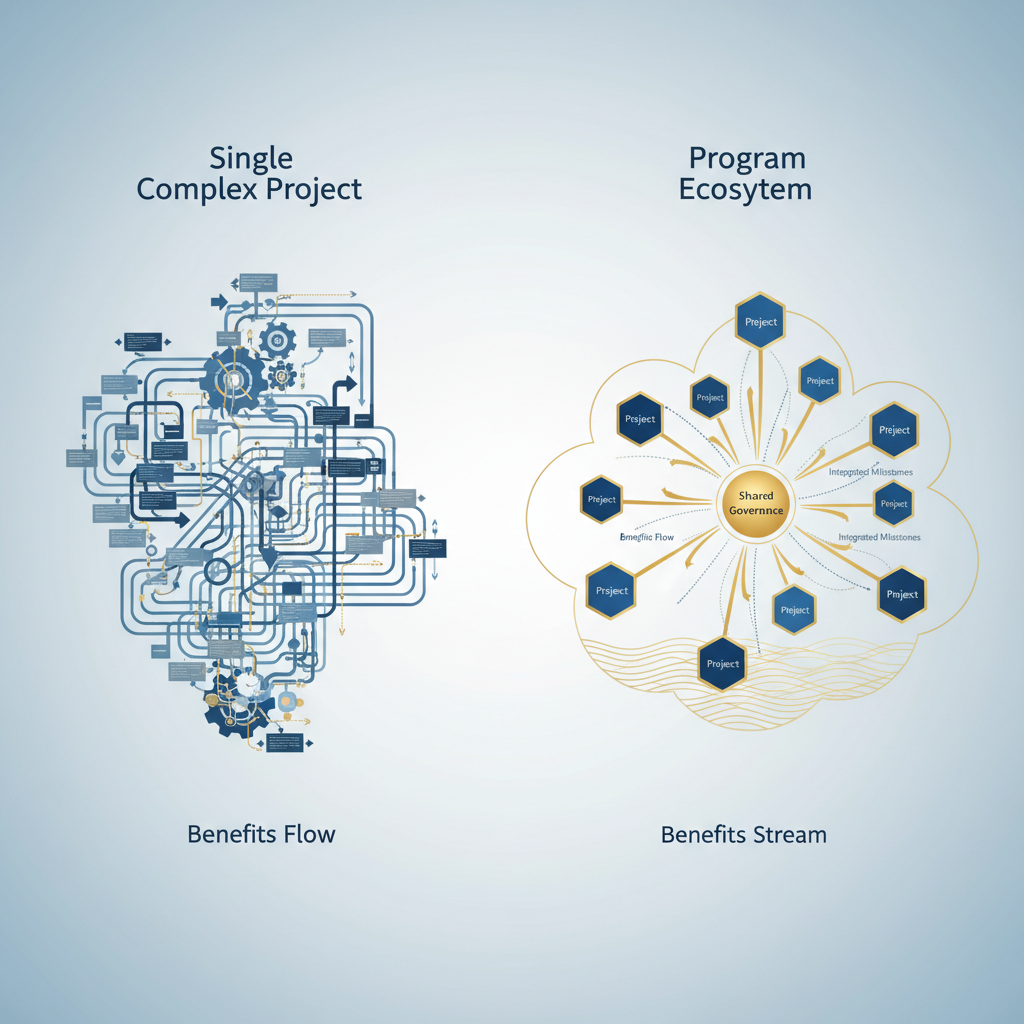
A large project can have a significant budget, many workstreams, and several vendors, yet still remain one project. A qualifying program has related components that must be coordinated for benefits, strategic alignment, governance, and resource decisions that no individual project manager can resolve alone.

The exam content also reflects that distinction. It covers program charters, sponsor approval, roadmaps, benefits realization, stakeholder engagement, and governance, not simply project delivery mechanics. Use our guide to mapping program experience before you decide which past work belongs in your application.
Test Government-Contracting Evidence Carefully
Government-contracting work can be strong evidence when it shows program leadership rather than only contract administration. Useful artifacts may include sanitized integrated schedules, governance decisions, benefits measures, dependency logs, risk escalations, and transition evidence.
Federal guidance recognizes that integrated master schedules and reporting can be central to tracking program performance in major work. Ask any support provider how it reviews confidential or sanitized evidence, and whether it understands the difference between contractual deliverables and the broader program decisions behind them.
Which PgMP Support Route Fits Your Actual Gap?
Support should fit the obstacle, not the provider’s largest package. We suggest comparing the route against the work you still need to do, then buying only the level of help that removes the real source of delay.
| Support Route | Best For | What It Should Include | When It Is Not Enough |
|---|---|---|---|
| Self-Study | Clear eligibility and strong discipline | Standards, ECO, practice questions, error review | Your experience summaries are still unclear |
| Application Review | Strong knowledge but uncertain evidence | Program selection, summary feedback, audit checklist | You also need a full study structure |
| One-To-One Mentoring | Specific writing or knowledge gaps | Targeted feedback and accountability | You need broad curriculum coverage |
| Cohort Training | Professionals who benefit from cadence | Live learning, milestones, peer discussion | Fixed sessions conflict with your workload |
| Complete Support | Gaps across application, review, and exam | Application help, study plan, practice, ongoing feedback | You do not yet meet eligibility requirements |
Choose Application Review When the Evidence Is the Problem
Application support should begin with an eligibility screen and a program inventory. It should then help you choose the strongest examples, map them to program leadership, and prepare documentation in case PMI selects the application for audit.
A useful reviewer challenges vague claims such as “managed stakeholders” or “oversaw delivery.” They ask what decision you owned, who depended on it, what benefit was at stake, and what happened because of your action.
Choose Mentoring or Cohort Support When Structure Is the Problem
Mentoring is useful when you know your experience qualifies but need accountability, feedback, or help interpreting scenario-based questions. Cohort training can work well when protected sessions fit your work calendar and peers help you maintain momentum.
Our personalized support comparison explains the difference between feedback on your actual evidence and generic teaching. Neither route should promise a panel outcome, because the panel independently assesses the application.
Expect Exam Support to Match the ECO
A serious preparation route should map learning to strategic alignment, program life cycle, benefits, stakeholders, and governance. It should also include timed practice and error analysis, since recognizing a concept is different from selecting the best answer under exam conditions.
How Can You Prepare Around a Full-Time Job and Certify a Team?
A full-time manager does not need a boot camp to prepare well, but they do need protected time and a sequence that treats the application as real work. An older PMI survey found a median 96 to 120 hours across the full credential journey, so we use that as a planning range rather than a promise of results.
Build a Twelve-Week Working Calendar
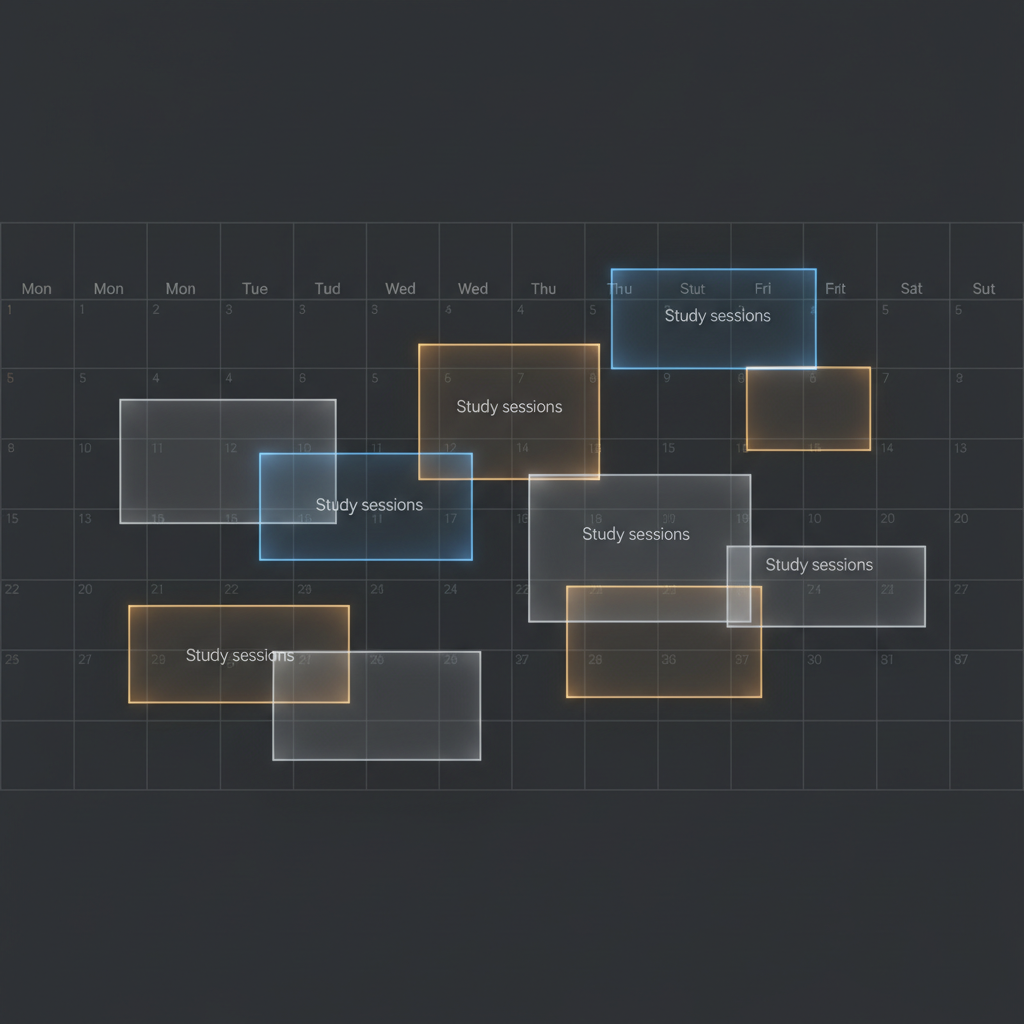
A 10-hour weekly rhythm creates 120 planned hours without asking you to disappear from your job. The exact allocation should change after your first diagnostic, but consistency matters more than an ambitious first week.
| Day | Time Block | Focus |
|---|---|---|
| Monday | 90 minutes | Read and map one ECO topic |
| Wednesday | 90 minutes | Apply concepts to scenarios |
| Friday | 60 minutes | Review notes and error patterns |
| Saturday | 4 hours | Practice set, mock block, or application work |
| Sunday | 2 hours | Review missed questions and plan the next week |
Use the early weekends for experience inventory and application writing, not just reading. Then shift more time to timed practice as your knowledge becomes integrated. Our exam prep playbook can help you organize that progression.

Decide Whether Three Managers Should Work in Parallel
Three eligible managers can pursue PgMP together within nine months, but only if each has protected study time and leadership accepts that the application and panel-review timeline may not move at the same speed for every person. Parallel preparation creates shared momentum, while staggered submission protects the group from one uncertain application delaying all three.

| Team Model | Best When | Primary Benefit | Main Risk |
|---|---|---|---|
| Parallel | All three have clear evidence | Shared cadence and common learning | Three simultaneous application issues |
| Staggered 2 Plus 1 | One manager needs more evidence review | The first two test the process | The third has less time buffer |
| Staggered 1 Plus 2 | Leadership wants an early proof point | Lessons improve later applications | The deadline becomes tighter |
Reserve a Real Contingency Window
A sensible nine-month plan uses the first two months for eligibility and summaries, keeps studying while panel review occurs, targets first exams by the middle of the schedule, and reserves the final months for contingency. PMI allows up to three exam attempts within one year after panel approval, but that flexibility should be a buffer, not the plan.
For a team deadline, each person should submit independently, keep an individual error log, and maintain their own evidence file. Our team timeline offers a practical structure for protecting those milestones.
What Does PgMP Certification Cost?
The financial decision has two parts: direct certification expenses and the value of the time you protect for preparation. Training prices vary by route, location, currency, and what the service includes, so a trustworthy calculation shows the known costs separately instead of hiding them in a broad estimate.
PMI lists annual individual membership at $164 in its membership store. Its published PgMP fee schedule lists a $800 member examination fee and a $1,000 nonmember examination fee, with retakes priced separately.
| Cost Item | USD Planning Amount | How To Use It |
|---|---|---|
| PMI Membership | $164 | Optional annual cost for the member rate |
| Member Exam Fee | $800 | First examination attempt |
| Nonmember Exam Fee | $1,000 | First examination attempt |
| Member Retake | $600 | Contingency only |
| Nonmember Retake | $800 | Contingency only |
| Support Or Training | Varies | Compare inclusions, feedback, and access period |
| Study Time | Personal | Multiply planned hours by your own value of time |
For a first attempt, membership plus the member exam fee totals $964, compared with $1,000 as a nonmember. That $36 difference is only part of the choice, since membership may also affect access to PMI resources. Check regional checkout pricing before paying, because currency and local pricing can change.
The better value question is not “what is the cheapest course?” It is “what level of support avoids a preventable delay or weak application without making me pay for help I will not use?” Our cost and ROI guide can help you put that decision into context.
Why Augment Consultancy for PgMP Coaching?
At Augment Consultancy, we work with experienced program managers who need a clear decision before they commit money, weekends, and professional credibility. Our PgMP coaching begins with the question that matters most: can your experience be documented as program leadership? We then help you organize eligible programs, strengthen summaries, prepare for review, and build an exam plan that fits real work. Our PMI-certified experts bring more than 20 years of experience to live mentoring, feedback, scenario practice, and accountability. We do not ask you to buy more support than your situation requires. If self-study fits, we will say so. If your application needs sharper evidence or your calendar needs structure, we will show you the route that fits. You keep control of the decision, the pace, and the final submission with our team before making a commitment. Start by exploring Augment Consultancy Home
FAQs on PgMP Coaching
Can I Self-Study for PgMP?
Yes, if your eligibility is clear, your experience demonstrates program leadership, and you can protect weekly study time, timed practice, and disciplined error review consistently.
Does an Active PMP Replace PgMP Project Experience?
An active PMP lets the PgMP application skip documented project experience, but you must still clearly show required program-management months, objectives, responsibilities, benefits, and components.
What Should I Ask a Government-Contracting Support Provider?
Ask how reviewers handle sanitized program artifacts, integrated schedules, benefits evidence, governance decisions, and contract constraints, then confirm their guidance remains aligned with PMI requirements.
Can Three Managers Earn PgMP Together Within Nine Months?
Three eligible managers can pursue PgMP within nine months when each protects weekly study time, submits independently, and leadership preserves a realistic panel-review and retake buffer.
When Is Paid PgMP Coaching Most Useful?
Paid coaching helps most when uncertainty involves application evidence, panel review, accountability, or scenario practice, rather than access to reading materials or a mock exam.