Which Flexible PfMP Training Formats Fit Your Schedule?
Compare flexible PfMP training formats by live time, time-zone fit, feedback, access, and support to choose a schedule that works.

PfMP preparation has to accommodate a demanding leadership role as well as exam study. PMI’s 170-question PfMP exam runs for 240 minutes, but the path also includes an experience-based application and panel review.
Among flexible PfMP training formats, the strongest schedule fit usually combines asynchronous domain lessons with scheduled mentor checkpoints and application feedback that can be booked across time zones. Pure self-paced study offers maximum control but less correction, while fixed cohorts add accountability but restrict timing. Choose by live attendance, start-date flexibility, feedback turnaround, access duration, and application-support depth.
We compare the main learning arrangements, identify the schedule each suits, and show how to score a shortlist without assuming one format is best for every PfMP candidate.
How Do Flexible PfMP Training Formats Compare?
A course format is more than a calendar. It determines when you can begin, whether a missed session becomes a setback, who can correct your application, and how much structure keeps your preparation moving. We recommend comparing formats before comparing course names or marketing claims.
The distinction matters because self-paced does not always mean solitary, and live does not always mean inflexible. Our PfMP Training Without a Fixed Schedule resource explores that distinction in more detail, while this page keeps the decision focused on schedule fit.
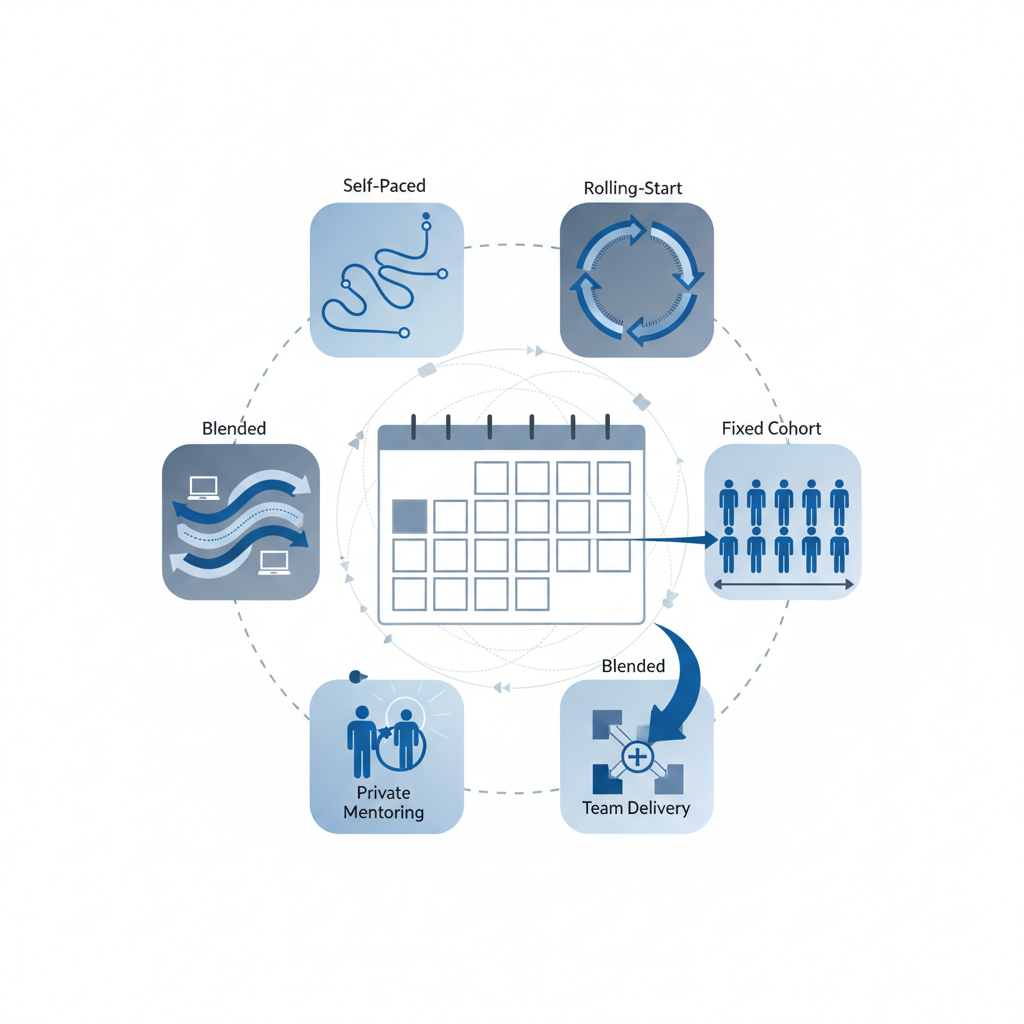
Self-Paced and Rolling-Start Learning
Self-paced learning gives you control over study blocks, which helps when travel, shifts, or urgent leadership work interrupt a normal weekly routine. A rolling-start model adds an enrollment advantage: you can begin at a recurring or immediate entry point rather than waiting for one shared class date.
Neither label proves that mentor access, application review, or mock debriefs are included. Ask whether live help is optional, how appointments are booked, and whether access expires before your application and exam preparation are complete.
Blended and Fixed-Cohort Learning
Blended learning combines on-demand material with scheduled live workshops, Q&A, mentor checkpoints, or mock reviews. It often gives busy candidates more freedom than a fully live course while preserving visible deadlines.
Fixed cohorts use shared dates and group progression. They can be useful when accountability matters more than flexibility, but they require a realistic attendance plan. Before enrolling, confirm whether recordings include the live teaching, the interactive questions, or both.
Private Mentoring and Team Delivery
Private mentoring replaces much of the shared calendar with booked one-to-one time. It is often the strongest arrangement for candidates who need tailored application feedback, governance discussion, or a study plan that changes around executive responsibilities.
Team delivery is different again. It can align a group around common portfolio-management language and organizational examples, but each participant should still confirm whether individual application feedback and mock debriefs are included.
| Format | Live-Hour Requirement | Scheduling Flexibility | Start Model | Feedback Depth | Application Support | Access Duration | Price Field |
|---|---|---|---|---|---|---|---|
| Self-Paced | Usually none or optional | High | Immediate or provider-set | Often limited unless mentoring is included | May be materials only | Provider-specific | Published or quote-only |
| Rolling-Start | Provider-specific | High | Recurring or immediate | Provider-specific | Confirm draft-review scope | Provider-specific | Published or quote-only |
| Blended | Scheduled checkpoints | Medium to high | Set or recurring | Moderate to deep | Confirm mentor review | Confirm recording access | Published or quote-only |
| Fixed Cohort | Often expected | Low to medium | Fixed date | Group-led | Confirm individual support | Confirm missed-session policy | Published or quote-only |
| Private Mentoring | By appointment | High | Booked start | Deepest potential | Confirm line-level feedback | Confirm mentor-access period | Usually quote-only |
| Team Delivery | Employer-set | Organization-controlled | Custom | Group plus optional one-to-one | Confirm individual review | Confirm post-course access | Usually quote-only |
How Do Live Attendance, Recordings, and Time Zones Change the Fit?
The practical question is not whether a course is online. It is whether its required live moments occur when you can reliably attend, and whether a recording preserves enough of the learning when you cannot.
In our PfMP pathways, we combine structured material with live support, and our fast-track option includes one year of live-session recordings. Candidates should still ask us which sessions require participation, what recordings include, and how the available time slots align with their local working hours. Our Learning Portal is where enrolled learners can access their materials and progress resources.

A recording protects continuity, but it does not automatically provide correction. If you miss a live mock debrief, you still need a clear way to ask follow-up questions, review a difficult answer, or obtain feedback on your portfolio evidence.
Before you pay, request the written policy for live attendance, recordings, time-zone reference, daylight-saving changes, booking lead time, rescheduling cutoffs, missed sessions, access extensions, and refunds. A provider that answers those questions clearly is easier to compare than one that only describes its content library.
Which Format Fits Your Working Pattern?
The right arrangement depends on the type of unpredictability in your schedule. We encourage candidates to choose for the constraint they actually have, not the study style they wish they had.
For a frequent traveler, self-paced study or a blended path with recordings can preserve momentum across flights and client commitments. The essential checks are mobile access, recorded teaching, flexible mentor booking, and enough access time to absorb a disrupted month.
PfMP maintenance also requires 60 PDUs every three years, so a sustainable format can matter beyond the initial preparation period.

For shift workers, rolling-start learning or private mentoring can be a better fit because recurring evening sessions may still collide with rotating work patterns. The priority is access to asynchronous questions and mentor appointments across more than one useful time window.
Caregivers with unpredictable evenings often benefit from self-paced material paired with scheduled checkpoints. Long access duration and clear pause or extension terms matter more than an ambitious weekly class plan.
Full-time portfolio and PMO leaders may prefer blended learning or private mentoring. They usually need compressed live time, direct discussion of governance decisions, and application feedback that makes efficient use of limited study hours. Our PfMP Certification Support framework helps candidates identify the support level before they commit.
What Feedback Does Your PfMP Application Need?
PfMP preparation is not only an exam-content decision. PMI requires a panel review of the experience summaries in a candidate’s application before the exam can be scheduled, according to the PMI certification handbook. That makes feedback depth a practical selection criterion.
A generic application handbook can help you start. A template can help organize information. Neither necessarily means someone will review the clarity of your portfolio evidence, identify weak governance language, or explain how to strengthen a specific summary.
Application Review
Ask whether feedback covers the whole application, individual experience summaries, or only general questions. Clarify whether review is one round or iterative, whether comments are line-level, and whether the reviewer understands portfolio governance rather than only exam terminology.
Our live and self-paced paths publish application-oriented support, while candidates should ask us about the exact review scope for the path they are considering. Our PfMP Mentoring Explained article shows why governance coaching is different from exam-tip delivery.
Governance Coaching
Strong coaching should connect your work history to strategic alignment, governance, portfolio performance, risk, and communications. PMI weights Strategic Alignment and Portfolio Performance at 25% each, so a study arrangement should help you reason through those areas instead of memorizing isolated terms.
For candidates who are unsure whether their work qualifies as portfolio-level leadership, begin by identifying the strategy, investment, governance, and value decisions your experience demonstrates before choosing a support level.
Mock Debriefs
A mock exam becomes more valuable when its results lead to a discussion. Ask whether the mock is timed, whether explanations cover incorrect choices, whether your domain gaps are identified, and whether a mentor can help translate those gaps into a revised study plan.
Provider Facts to Confirm
Our published PfMP self-paced path includes video lectures, an application-writing handbook and descriptive videos, practice questions, live online sessions, and gap-assessment sessions. Our fast-track live path includes live sessions, a one-to-one mentor gap assessment, application support, and one year of recording access.
We do not publish a universal price on those paths, so candidates should request current pricing and terms directly. That is more useful than treating an old fee, an outdated batch date, or an unconfirmed policy as a comparison fact.
Candidates assessing their own experience can use our Strategic Portfolio Work Guide before selecting a feedback level.
How Can You Score Your Shortlist?
A weighted worksheet keeps an attractive schedule from distracting you from a missing support feature. Score each candidate format from zero to five, then multiply the score by the weight that reflects your own constraint.
A traveler may increase the weight for recordings and rescheduling. A candidate with complex portfolio experience may place more weight on application review and direct mentoring.
| Criterion | Default Weight | What A High Score Looks Like |
|---|---|---|
| Ability To Attend Required Live Sessions | 25% | Your normal work pattern supports attendance |
| Time-Zone And Rescheduling Fit | 20% | Time slots and change rules are clearly workable |
| Application-Review Depth | 20% | Specific review scope and feedback process are published |
| Direct Mentor Access | 15% | You can reach a qualified instructor or mentor directly |
| Recording And Access Duration | 10% | Enough access remains through your study timeline |
| Mock Debrief And Governance Coaching | 10% | Feedback follows practice results and real portfolio questions |
Use this calculation for each row: score divided by five, multiplied by the criterion weight. Add the six weighted results to compare overall schedule fit.
Do not give a forum-only support model the same feedback score as direct review. Likewise, do not score a course highly for flexibility until its start date, attendance requirement, recording policy, access expiry, and rescheduling terms are confirmed in writing.
For a deeper look at that tradeoff, read our PfMP Self-Study Vs. Coaching comparison.
Why Learn with Augment Consultancy?
At Augment Consultancy, we build PfMP preparation around the real work behind the credential, not a generic sequence of webinars. Our learning approach brings candidates directly to certified professionals with real-world program and portfolio management experience. We combine structured learning, practical examples, application support, and exam preparation so you can make an informed choice about the level of live help you need. If your schedule changes, start with a conversation about the attendance, recording, access, feedback, and rescheduling terms that apply to your chosen path. We will help you distinguish a library of material from usable mentoring and a course outline from support that responds to your actual portfolio evidence. Read a few candidate experiences, assess your own schedule honestly, then compare current paths and select the learning arrangement that fits your responsibilities, deadlines, and preferred level of direct feedback in our Course Store.
FAQs on Flexible PfMP Training Formats
What Is the Most Flexible PfMP Training Format?
For many busy candidates, a blended arrangement balances control with correction: asynchronous study fits changing weeks, while scheduled mentor checkpoints and application review sustain accountability.
Can I Prepare for PfMP Without a Fixed Cohort?
Yes. Choose a rolling-start or self-paced course only after confirming whether application feedback, mock debriefs, live question time, and mentor appointments remain available after enrollment.
Are Recorded Sessions Enough for PfMP Preparation?
Recordings protect study continuity, but they do not automatically provide correction. Pair them with stated access to an instructor, application review, and a mock-exam debrief.
What Should I Ask About PfMP Time Zones?
Ask for the published session time zone, required attendance, recording policy, booking lead time, rescheduling deadline, access expiry, extension terms, refund rules, and mentor-feedback turnaround.
Does PfMP Training Need Application Review?
Because PMI requires a panel review before exam scheduling, candidates with complex experience should prioritize programs that explain the difference between templates, review, and line-level feedback.